In the digital landscapes of modern video games, museums have evolved from mere backdrop settings into profound spaces of learning and discovery. Forget the dusty, silent halls of old; these virtual institutions are dynamic, interactive, and often central to the player's journey. They serve the same core purpose as their real-world counterparts: to curate, display, and contextualize. The only real difference is the medium—one is built from atoms, the other from bits and pixels. Whether they're providing crucial backstory, acting as elaborate tutorials, or simply offering a moment of quiet awe, these in-game museums prove that education can be seamlessly woven into entertainment. It's a testament to how game design has matured, understanding that players often crave depth and context just as much as action.
Starfield’s NASA Launch Tower: A Nod to Our Spacefaring Past
Bethesda's sprawling space epic, Starfield, is littered with pockets of history, but none are quite as poignant as the NASA Launch Tower. Located in what was once Florida, this location isn't just a set piece; it's a love letter to human ingenuity.
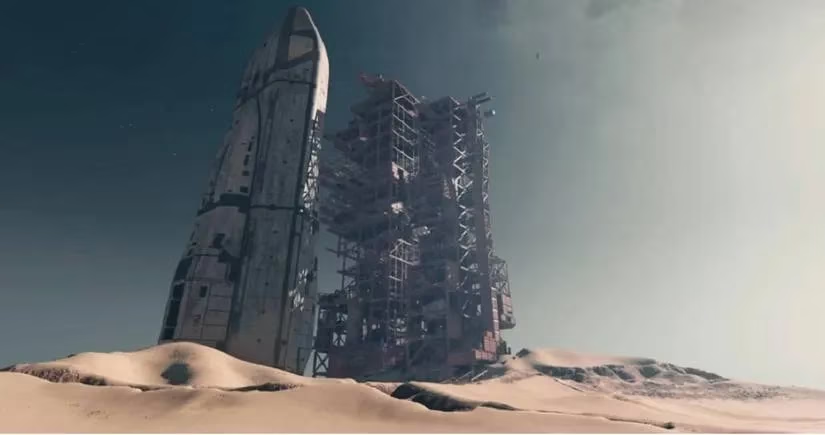
As part of the main narrative, players are required to visit this site. What they find is a breathtaking archive of humanity's first steps into the cosmos. The museum is a treasure trove of authentic-feeling exhibits:
-
Historic Vessels: Mercury capsules, Saturn V rockets, and early space shuttles.
-
Equipment & Attire: A full array of spacesuits, rover models, and mission control consoles.
-
Interactive Plaques: Each display comes with detailed descriptions, providing context for the missions and the technology that made them possible.
For lore enthusiasts, this location is pure gold. It grounds the game's far-future setting in a relatable, Earth-bound history, answering the pivotal question of why humanity took to the stars. And yes, you can even snag the iconic Mercury Spacesuit for your own collection—a little souvenir that nobody will miss (probably). In a game about exploring a thousand new worlds, this museum reminds players of the one world it all started on. It's a powerful, nostalgic pit stop that adds immense weight to the journey.
🔭 Outer Wilds’ Observatory: The Tutorial Disguised as a Museum
Mobius Digital's Outer Wilds is a masterpiece of environmental storytelling, and its opening act sets the stage perfectly. The Observatory on Timber Hearth is the first major location players visit to obtain their ship's launch codes. While it might seem like a one-time stop, it's actually a brilliantly designed introductory museum.
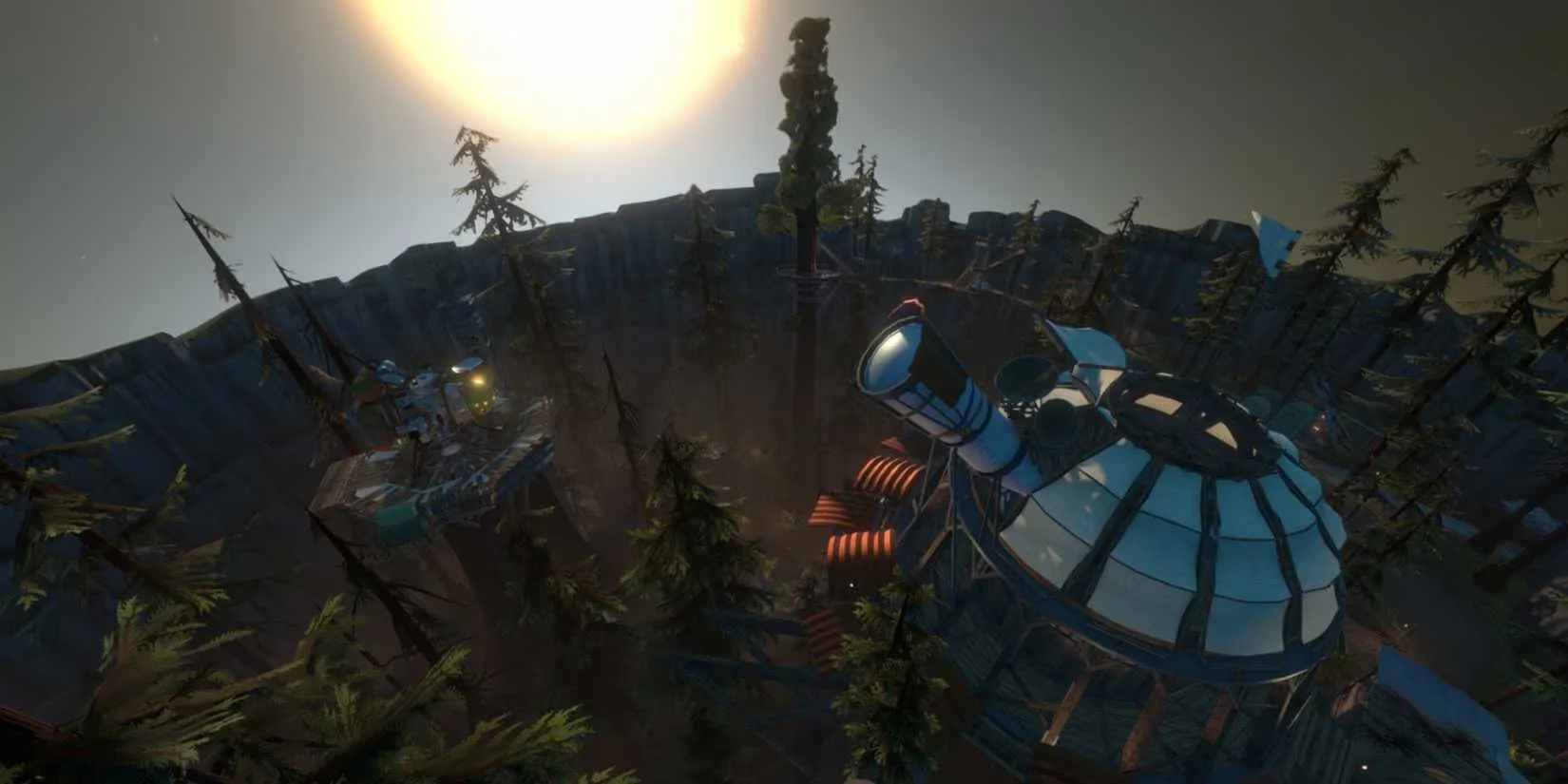
This cozy, wooden structure houses exhibits that are anything but ordinary. They are subtle hints, clues, and previews of the entire game's mysteries. A quick tour reveals:
| Exhibit | What It Teaches |
|---|---|
| Anglerfish Specimen | Introduces a major environmental hazard you'll encounter in dark space. |
| Gravity Crystal | A hands-on demo of the weird local physics you'll need to master. |
| Quantum Moon Rock | Your first encounter with quantum entanglement and observation-based physics. |
| Outer Wilds Ventures History | Context for the organization you're a part of and its technology. |
This space is the ultimate "show, don't tell" tutorial. It doesn't hold your hand with pop-up instructions; instead, it piques your curiosity. Every artifact you see here will become critically important later. The museum plants seeds of mystery that grow into the game's central puzzles. It teaches players to be observant and to make connections, proving that a museum can be the most engaging teacher of all.
🦉 Animal Crossing’s Museum: Your Personal Curatorial Project
For a more relaxed, long-term museum experience, look no further than the iconic museum in the Animal Crossing series. Overseen by the knowledgeable (and slightly verbose) owl Blathers, this museum is a collaborative project between the player and the game.
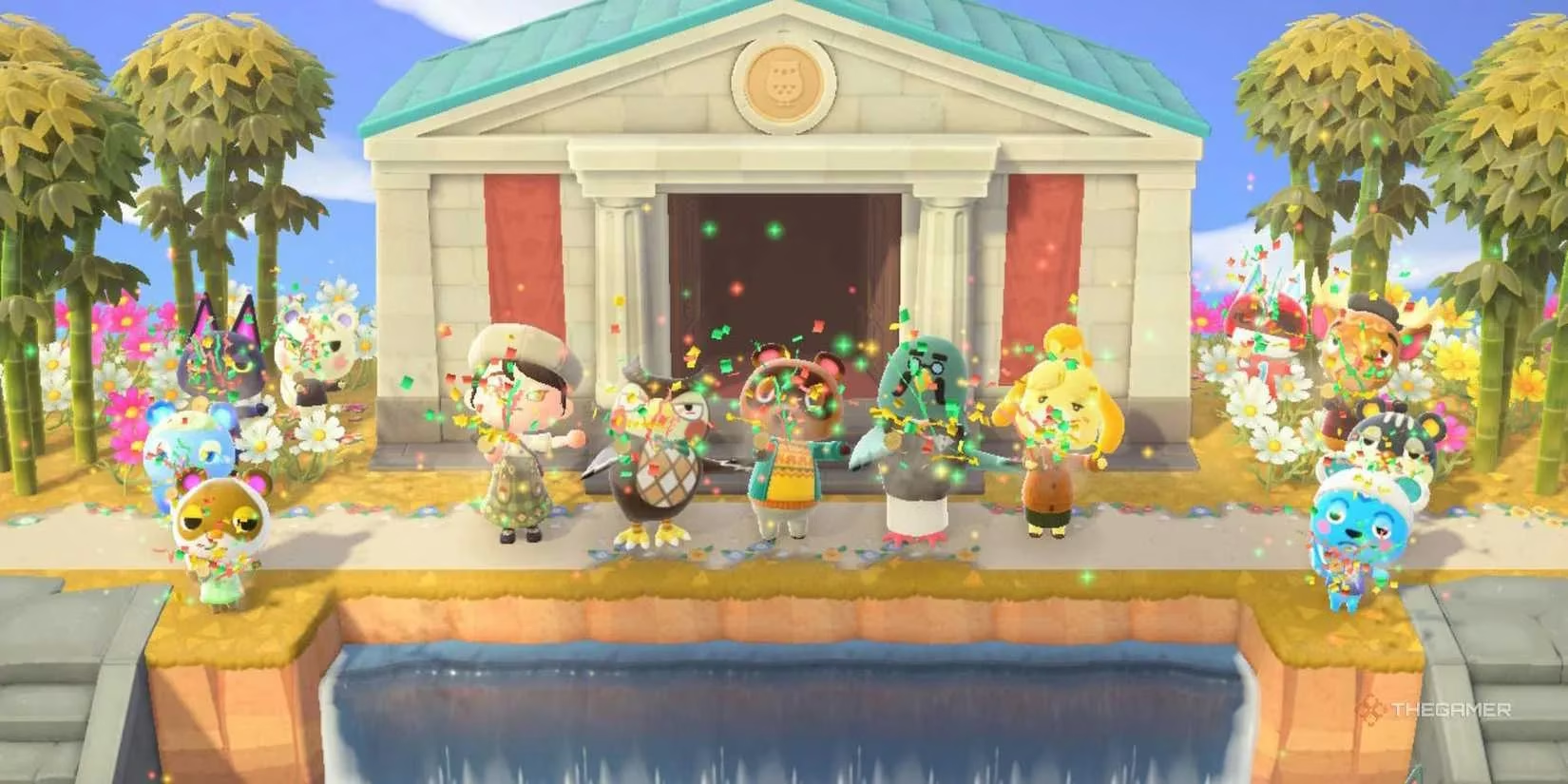
Unlike pre-built museums, this one starts empty. Players are responsible for filling it by donating their finds from around the island. The process is deeply rewarding and breaks down like this:
-
The Hunt: Catch fish and bugs, dig up fossils, and purchase authentic art from the shady fox, Redd.
-
The Donation: Bring your finds to Blathers, who will enthusiastically (or, in the case of bugs, fearfully) give you a fun fact about each item.
-
The Exhibition: Watch as your donations are beautifully displayed in themed wings:
-
A serene aquarium for fish.
-
A lush, bug-filled garden.
-
A stately art gallery.
-
A dramatic fossil hall in the basement.
-
The museum becomes a living journal of your accomplishments. While the interactive plaques only show the donation date, the real knowledge comes from Blathers himself. The joy comes from filling out the collection and then strolling through the completed exhibits, a tranquil testament to your patience and exploration. It turns the act of collecting into a communal, educational endeavor. It's a chill vibe, for sure, but one that instills a real sense of pride and discovery.
The Big Picture: Why Virtual Museums Matter
The evolution of in-game museums reflects a broader trend in gaming: the desire for meaningful, contextualized experiences. Players are no longer satisfied with plain old fetch quests or empty lore dumps. They want to engage with a world's history and mechanics. These digital museums serve multiple vital functions:
-
Narrative Anchors: They provide essential backstory and world-building without relying on lengthy cutscenes.
-
Mechanical Tutorials: They teach game systems in an organic, exploratory way (à la Outer Wilds).
-
Player Agency: They offer spaces for personal curation and achievement (à la Animal Crossing).
-
Emotional Resonance: They create moments of awe, reflection, and connection to a game's themes.
From the historical reverence of Starfield to the clever tutorializing of Outer Wilds and the personalized curation of Animal Crossing, these spaces show that video games are more than just playthings. They are platforms for informal, interactive education. They prove that learning can be an adventure, and that sometimes, the most memorable lessons are found not in a classroom, but in a beautifully rendered digital hall, waiting for a curious player to walk through its doors. The next time you boot up a game, take a detour to its museum—you might just be surprised at what you learn.
Industry analysis is available through The Verge - Gaming, which frequently explores the intersection of technology and interactive storytelling. Their features on virtual environments highlight how in-game museums, like those in Starfield and Animal Crossing, are redefining the boundaries between entertainment and education, offering players immersive experiences that blend narrative depth with hands-on discovery.