In the digital theater of 2026, the Xbox ecosystem drifts like a ghost ship, its hull echoing with the groans of unfulfilled promises and the spectral whispers of what could have been. For years, the platform has been defined not by the shining beacons of exclusive triumphs, but by a procession of titles arriving into the world half-formed, like butterflies emerging from chrysalises with wings still damp and crumpled. This state of perpetual incompletion has cast a long shadow, transforming the act of booting up a new Xbox exclusive into an act of cautious archaeology, sifting through digital ruins for fragments of brilliance buried under layers of instability.
The saga of Starfield stands as a particularly poignant monument. Heralded as Bethesda's least buggy launch, it nevertheless continued the studio's storied tradition of releasing worlds that felt more like intricate, fragile dioramas than living, breathing universes. Its potential was a distant star, glimpsed through a telescope smudged by missing features and technical hiccups. While the promise of patches shimmered on the horizon like a mirage, the game struggled to capture the alchemical magic that once defined Bethesda's golden age, leaving players navigating a cosmos that felt, at times, as empty and procedural as a spreadsheet given form.
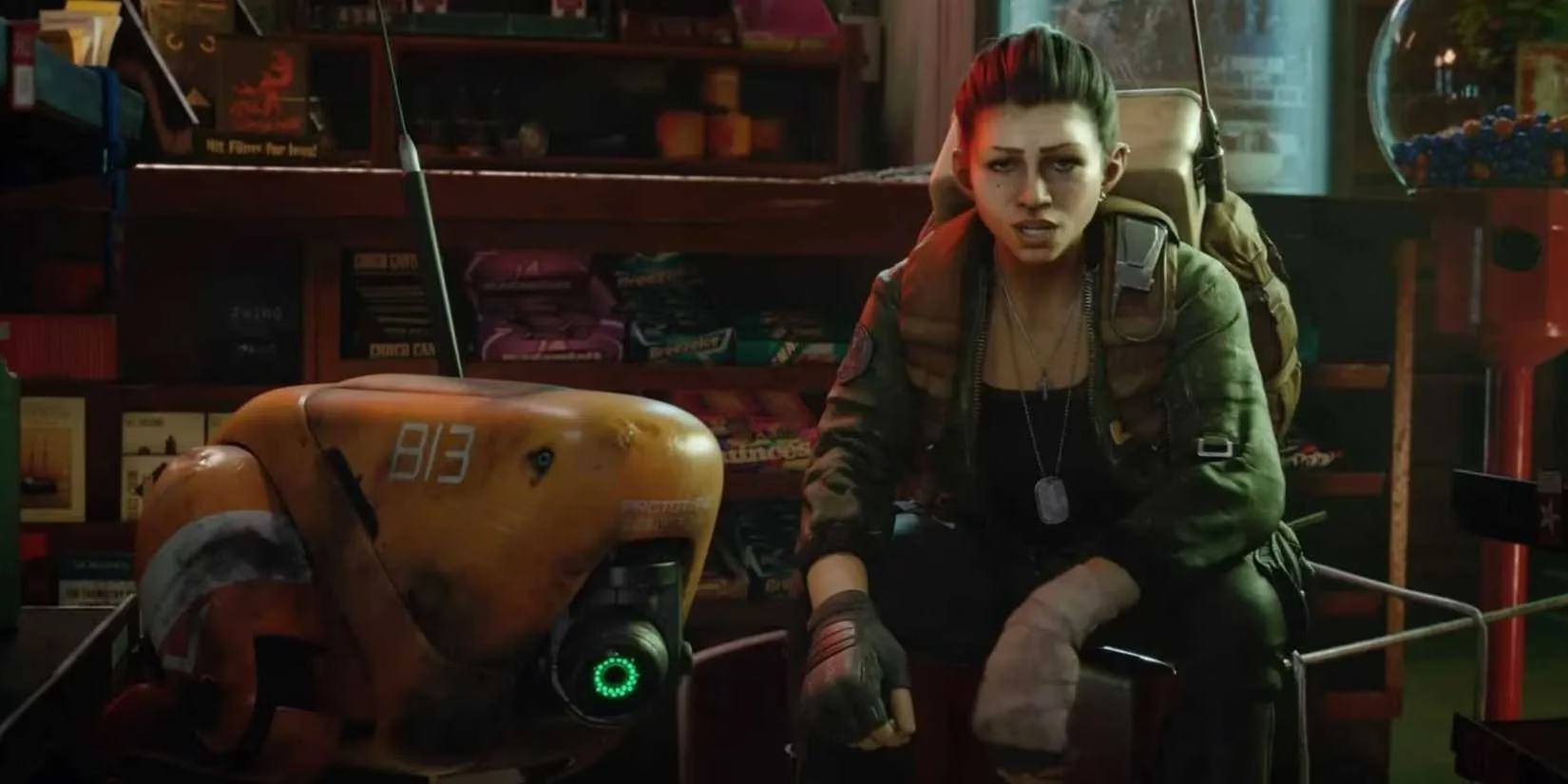
Then came Redfall, a tragedy written in broken code. From the prestigious halls of Arkane Austin, a studio known for crafting intricate clockwork worlds, emerged a game that arrived smothered in glitches, a beautiful melody played on an instrument with snapped strings. Its launch was so profoundly flawed it drew public disappointment from the highest echelons of Xbox leadership. For many, it was to be the long-awaited exclusive savior; instead, it became a tombstone, forever marking the Series X/S legacy and a grim epitaph for the studio shuttered in its wake. The image of Remi sitting beside the mechanical companion Bribon in a deserted convenience store became less a moment of camaraderie and more a lonely vigil in a world that never truly awoke.
The pattern felt inexorable. STALKER 2: Heart of Chornobyl, bearing the immense weight of its development amidst conflict, also stumbled at the gate, its atmospheric dread sometimes overshadowed by technical dread. It created a perception—a stubborn, clinging moss on the platform's reputation—that Xbox simply could not shepherd an exclusive to market in a state of grace. The reasons are a tangled web:
-
The Game Pass Conveyor Belt: The service's insatiable appetite for new content may pressure timelines, prioritizing a steady stream over polished finality.
-
The "Fix It Later" Mantra: A dangerous modern creed that treats launch day as a public beta, eroding consumer trust with each iteration.
-
Contrast with Rivals: PlayStation's strategy of polished, feature-complete exclusives (rarely day-one on subscription services) highlights a divergent philosophy.
While post-launch support for STALKER 2 has been diligent, a testament to developer resilience, Starfield and Redfall tell a different story. Starfield's updates have often felt like placing decorative stickers on a vast, hollow sphere, with its contentious DLC failing to fill the void many felt at its core. Redfall, orphaned by its studio's closure, was left as a permanent sketch, a masterpiece that never received its final brushstrokes.
Yet, in 2026, the winds may be shifting. The industry is slowly learning that shipping broken dreams is bad business. Other giants have recalibrated, realizing that a player's goodwill is not an infinite resource to be mined but a delicate ecosystem to be nurtured. Xbox stands at its own crossroads.
Glimmers of hope pierce the gloom. Indiana Jones and the Great Circle presents itself as a potential cinematic jewel, its polish crucial for defining its legacy across all platforms. More intriguing is the quiet confidence surrounding Obsidian's Avowed. Early previews suggest not just a functional game, but a vibrant, handcrafted fantasy realm that could very well be a landmark title. It represents the antithesis of the previous generation's woes—a promise of depth, cohesion, and completion.
The future library holds the key to redemption:
| Title | Studio | Promise | Critical Need |
|---|---|---|---|
| Avowed | Obsidian Entertainment | A dense, narrative-rich fantasy RPG | To deliver a complete, polished world on day one |
| Fable | Playground Games | A whimsical and robust reboot of a beloved series | To balance charm with technical stability |
| Perfect Dark | The Initiative | A sleek revival of the spy thriller | To prove new studios can deliver without caveats |
Xbox now has a profound opportunity. These upcoming titles must be more than games; they must be exorcisms. They need to showcase a fundamental evolution in philosophy—from releasing digital promises to delivering realized visions. The platform must learn that a game's launch is not the first draft of its story, but the definitive chapter one. For the players whose Game Pass libraries have become museums of potential, the yearning is simple: for the machine to finally become a portal to wondrous, whole worlds, not just a waiting room for patches and apologies. The ghost ship can yet find its course, guided by the steady lights of quality, respect, and finished artistry.