In 2026, Starfield remains a game that invites players to revisit its worlds, factions, and companions through new playthroughs and The Unity. Yet one narrative beat continues to draw scrutiny: the reveal that Andreja is a member of House Va’ruun. On paper, the moment is meant to land as a major twist. In practice, it exposes a persistent tension between what the player knows and what the player’s character should already understand. The scene works best for a first-time player who has not yet absorbed Starfield’s lore. It works far less well for anyone who thinks about the moment from inside the game’s universe.
Players first meet and recruit Andreja during the 'Into the Unknown' quest. She is guarded, mysterious, and careful about her past. Only after the player invests time in getting to know her does she reveal that she belongs to House Va’ruun, a faction with a deeply negative reputation because of a violent crusade once waged to spread its religion. The revelation is framed as a surprise, but it should not be a surprise to the player’s character. That distinction is the heart of the problem.
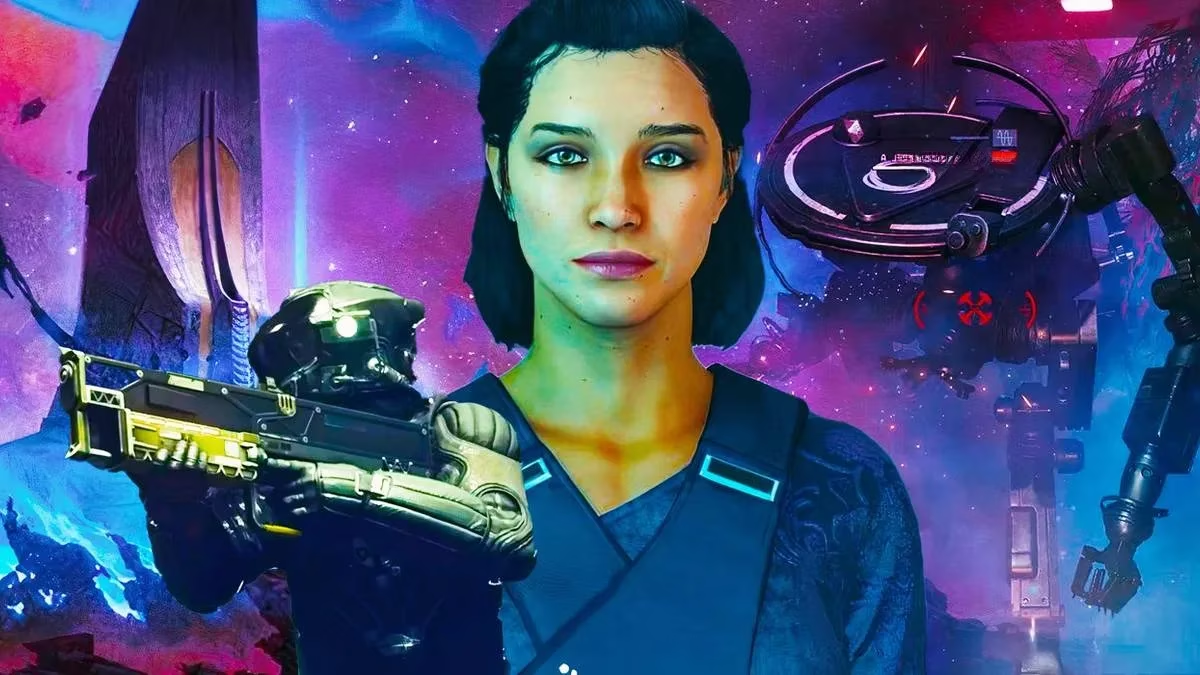
Andreja’s dialogue is not subtle about pointing toward her background. She describes herself as an outsider among Constellation. She hints at difficulties with Va’ruun zealots. She mentions that her family did not trust outsiders, a detail that fits neatly with House Va’ruun’s isolationist reputation. Her dark clothing and distinct style also align with the visual language associated with the faction. These are not hidden clues buried in obscure terminal entries. They are direct conversational signals designed to make players curious about her past.
| Clue from Andreja | What it suggests | Why the character should notice |
|---|---|---|
| She feels like an outsider in Constellation | A troubled or secretive background | A person raised in Starfield’s universe would recognize the pattern |
| She mentions past issues with Va’ruun zealots | Familiarity with the faction | The character should wonder why she has such specific experience |
| Her family distrusted outsiders | Isolationist cultural influence | House Va’ruun is known for exactly that posture |
| Her dark clothing and style | Visual ties to Va’ruun aesthetics | The character would likely read the cultural signifiers |
This raises an obvious question: if Andreja truly wanted to hide her identity, why would she dress in a way that echoes House Va’ruun and speak so openly about related topics? The answer is narrative convenience. Her dialogue is written to tease the player, not to preserve the character’s secrecy. As a storytelling tool, that approach is effective enough. As an immersion-building choice, it is strained. It asks the player to accept that their character is less observant than the player is encouraged to be.
The issue is not limited to Andreja. Starfield sometimes treats players as an audience for a movie rather than as people actually living in the game’s world. This habit appears in the game’s dialogue options, where special choices such as flirting or intimidation are spelled out in brackets. Players do not need to intuit that saying 'I love you' to a companion is the romance option, because the game labels it for them. That kind of hamfisted presentation may explain why Andreja’s reveal is handled with so little ambiguity. The game wants to ensure the player understands the twist, even if that clarity comes at the cost of believable character behavior.
Bethesda’s roleplaying games have shown a recurring tendency to deliver exposition through the player character as if the protagonist were a blank window. In Starfield, that tendency clashes with the premise that the protagonist has grown up in this universe. A character raised among these factions would know the visual cues of House Va’ruun. They would recognize the cultural weight of Andreja’s comments. They would likely suspect her background long before the formal reveal. Instead, the scene depends on the character’s ignorance so that the player can experience surprise.
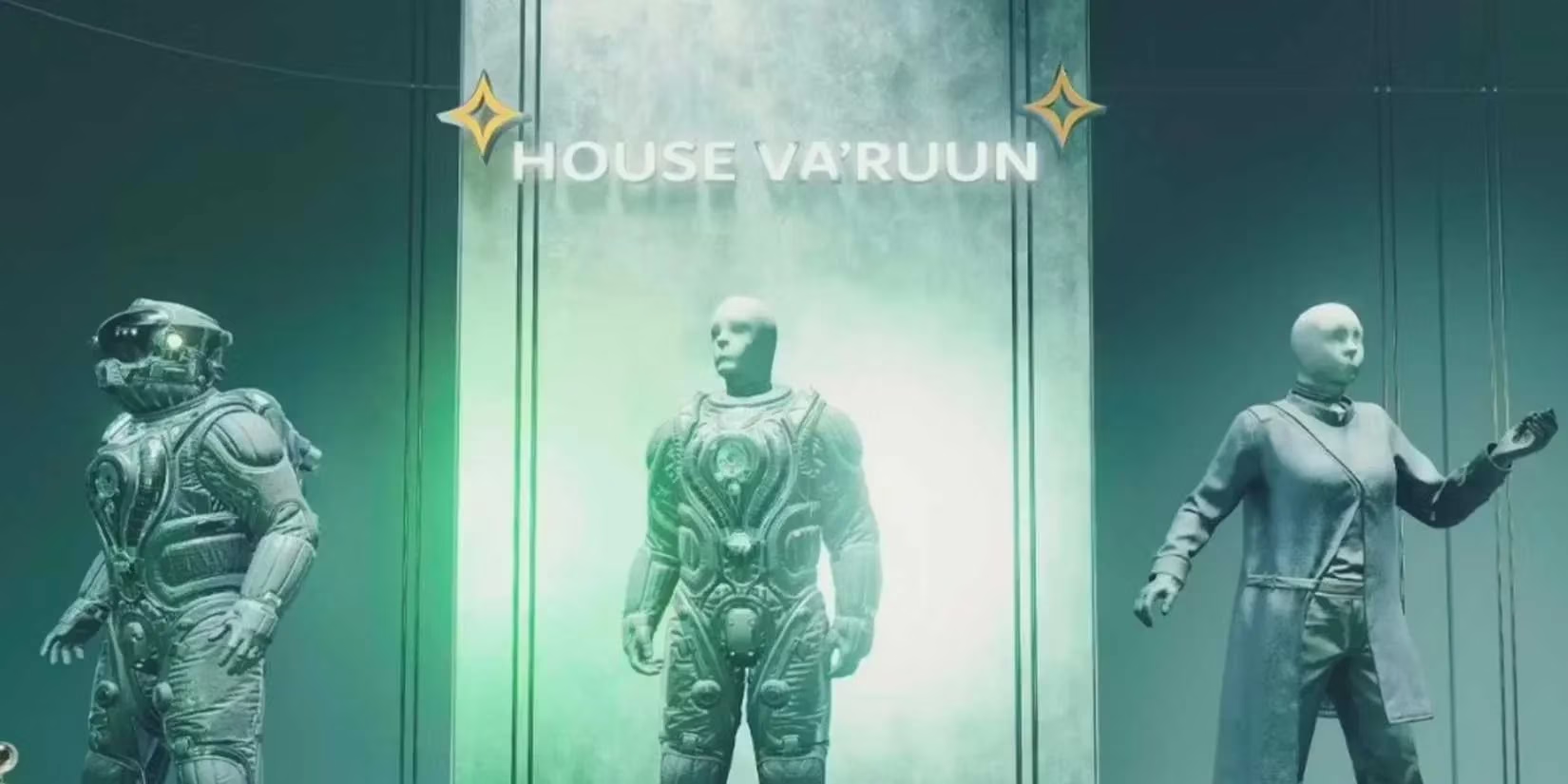
As of 2026, the debate remains relevant because House Va’ruun lore has only become more prominent in discussions around Starfield’s expansions and continued player revisits. The more familiar players become with the faction, the more obvious Andreja’s hints appear. Replaying through The Unity makes the problem even clearer. A second run removes the player’s own ignorance, and what remains is a scene that asks the protagonist to overlook evidence the player can no longer miss. Is that really a twist, or is it a delay disguised as one?
Some exposition is necessary when introducing a new science-fiction universe. Players need to learn about factions, history, and cultural tensions. The problem is not that Starfield explains House Va’ruun. The problem is that it explains the faction through a reveal that undermines the protagonist’s place in the world. A more immersive approach could have let the player’s character recognize the signs, confront Andreja earlier, or choose to feign ignorance. That would preserve surprise for some players while respecting the character’s knowledge.
Andreja’s reveal is therefore emblematic of a larger storytelling weakness. It is not a catastrophic flaw, and it does not ruin the character. It does, however, break the sense that the player is inhabiting Starfield’s universe rather than watching it from outside. The scene sacrifices in-universe logic for player-facing drama. In 2026, with more players returning to the game and knowing its factions better than ever, that trade-off feels harder to ignore. The twist may still work on a first playthrough, but the question is whether it should have needed the player’s ignorance at all.