In the year 2026, the gaming cosmos is still abuzz with chatter about a potential Starfield sequel. Former Bethesda developers have waxed lyrical, suggesting such a follow-up would be "one hell of a game," iterating on the original's foundation. The corporate narrative, championed by Xbox's Phil Spencer, positions the IP as part of the vaunted "Big Three" alongside The Elder Scrolls and Fallout, aspiring for the mythical longevity of Skyrim. Yet, for a vocal contingent of players and observers, this galactic ambition feels less like a destined journey and more like a corporate mandate propping up a profoundly mediocre experience. The question isn't just whether a sequel will happen—it's whether the original ever earned that privilege in the first place.
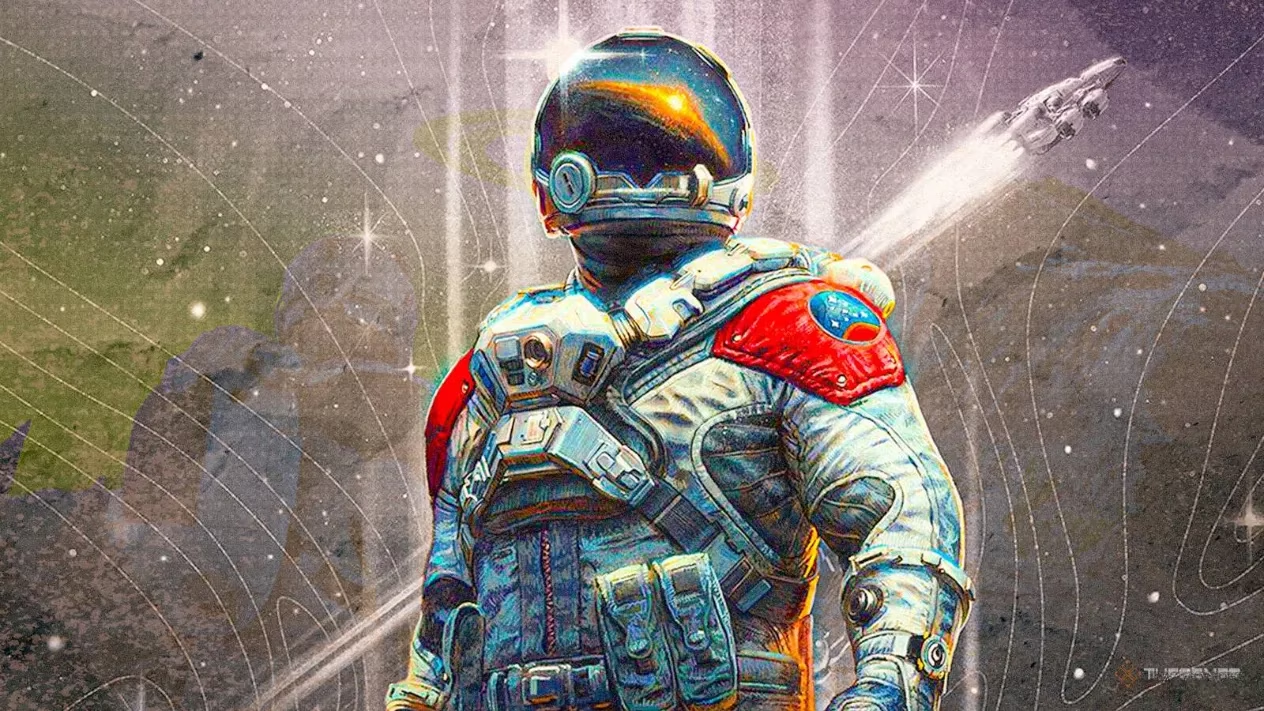
The Galactic Letdown: Why Starfield Was, Frankly, Mid
Let's not orbit the issue: Starfield was a colossal disappointment for many. Players invested dozens of hours, piloting their ships through the void with a desperate hope that the next celestial body would finally deliver the magic Bethesda was famed for. That moment never arrived. The experience was often a masterclass in friction:
-
Forgettable Crew: With perhaps one notable exception, the companion characters were about as compelling as a vacuum-sealed nutrient paste packet. Their personalities failed to ignite any meaningful connection.
-
Torturous Inventory Management: The encumbrance system wasn't a challenging mechanic; it was an exercise in digital masochism, turning every planetary foray into a stressful game of "what precious resource do I leave behind this time?"
-
A Universe of Tedium: Space travel felt like a glorified loading screen simulator, and the thousands of planets promised often delivered barren, copy-pasted landscapes devoid of wonder. The much-maligned "Temple" puzzles reached new heights of egregious, mind-numbing boredom.
The core narrative failed to provide enough gravitational pull to overcome these orbital debris fields of poor design. For a studio that built its reputation on immersive worlds and emergent storytelling, Starfield felt strangely hollow and formulaic.
The IP That Wouldn't Die: A Tale of Corporate Priorities
What's truly baffling is the relentless push to cement Starfield as a flagship franchise despite its lukewarm reception. This drive highlights a brutal, often illogical reality of the modern gaming industry. Consider the stark contrast:
| The Starfield Treatment | The Fate of Others |
|---|---|
| Gets sequel talks despite mixed reviews 🚀 | Studios like Arkane Austin (Redfall) & Tango Gameworks (Hi-Fi RUSH) get shuttered 🏚️ |
| Considered a "tentpole" IP due to studio name recognition 🏛️ | Critically adored titles like Prince of Persia: The Lost Crown see their teams disbanded 👑 |
| Benefits from massive, ongoing financial investment 💰 | Smaller, creative projects starve for funding and visibility 💸 |
The closure of talented studios in 2024-2025 to ostensibly streamline resources for Bethesda's big bets makes Starfield's privileged position feel particularly galling. It embodies the high-risk, high-budget AAA model that increasingly dominates the landscape, often at the direct expense of more innovative, mid-scope projects. The message is clear: a mediocre game from a famous brand has a better shot at a sequel than a brilliant game from a less-established team. It's a business model that prioritizes guaranteed (or hoped-for) returns over artistic merit or player passion.
The Sequels We Deserve vs. The Sequels We Get
When pondering Starfield's seemingly inevitable continuation, one can't help but mourn the myriad of stellar games now lost to the void, their stories forever unfinished. This isn't about vindictiveness; it's about a profound sense of imbalance. The industry's financial currents flow overwhelmingly toward safe, recognizable IPs, creating a cycle where:
-
Massive investment is sunk into a known quantity.
-
Performance is middling, but the brand is too big to fail quickly.
-
More capital is allocated for a sequel to "fix" the issues, justified by the initial sunk cost.
-
Smaller, proven successes are left to wither, their potential sequels deemed "too risky."
It’s a galactic-scale injustice. Players are told what franchises matter based on budget spreadsheets, not on the genuine, heartfelt connections forged in virtual worlds. The lifeblood—capital and development focus—that could resurrect beloved, smaller universes is instead funneled into trying to correct the course of a behemoth that never quite found its heading.
Conclusion: Navigating an Unfair Cosmos
As we look to 2026 and beyond, the trajectory for Starfield seems set. A sequel is probable, backed by the full might of Microsoft and Bethesda's marketing engines. It may even be a good game, having learned from its predecessor's missteps. Yet, its legacy will forever be tinged with the context of its birth and promotion. It will stand as an emblem of an industry where name recognition and financial mass can outweigh quality and player sentiment, where corporate constellations dictate which worlds get to live, expand, and which are unceremoniously blasted into oblivion. The universe, it turns out, isn't fair—even the virtual ones we build.