In the grand, chaotic theater of Bethesda RPGs, Starfield struts onto the stage with 1,000 planets, a spaceship, and a reputation for feeling like a beautifully rendered parking lot. Since September 2023, critics have grumbled that its open-world galaxy is largely empty and lifeless. Meanwhile, Fallout 4 got a massive popularity surge after Amazon Prime's live-action adaptation. But hold your horses: when it comes to actual role-playing, Starfield quietly outclasses Fallout 4 in one crucial way. It lets players be someone, not just steer someone.
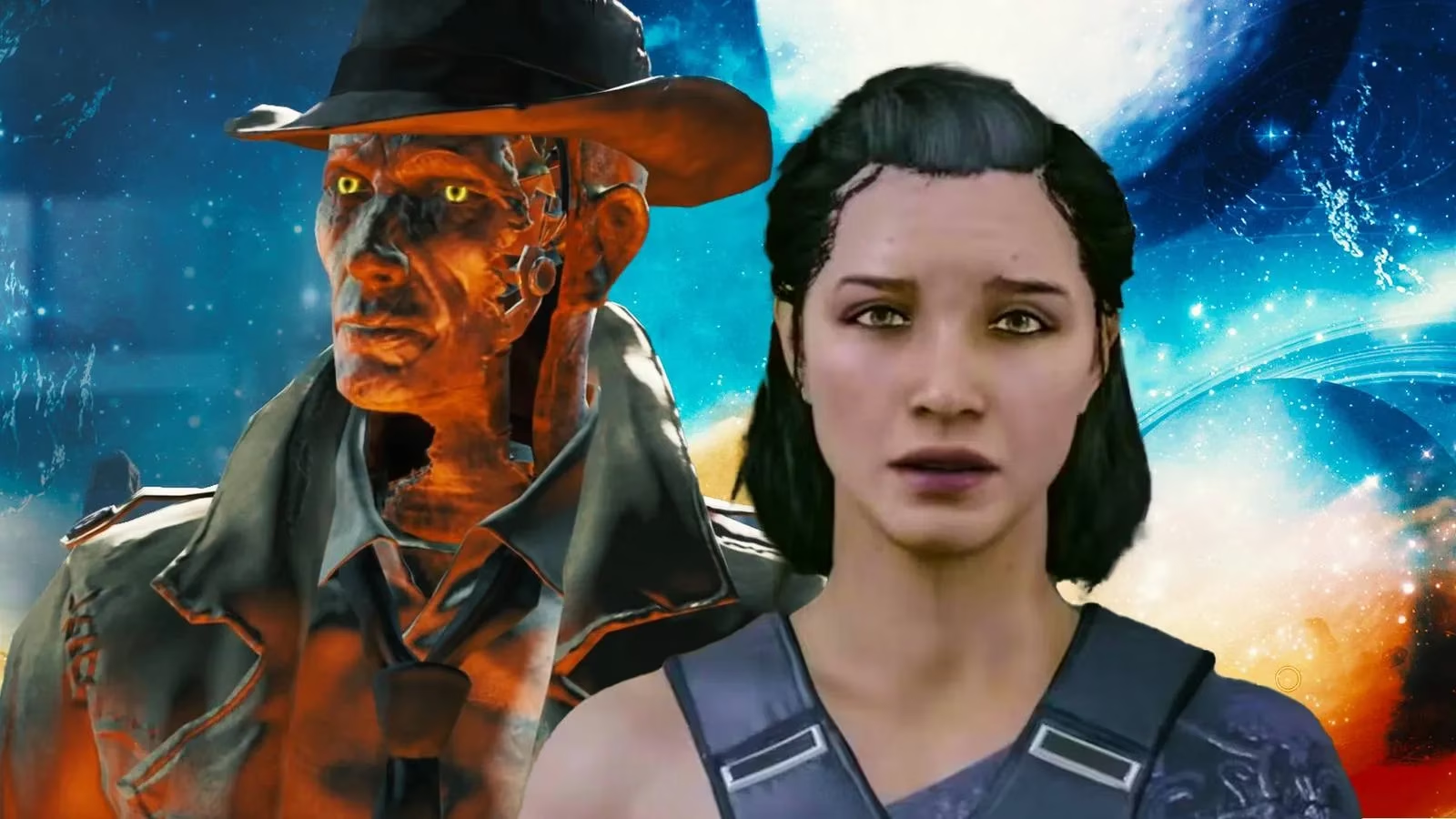
The Sole Survivor Comes With Baggage
Fallout 4 casts players as the Sole Survivor, a name that spoils the plot like a friend who blurts out a movie ending. Vault 111 was a Vault-Tec experiment on long-term cryogenic stasis. The staff had supplies for only 180 days, and they were told to evacuate after an all-clear signal that never came. As supplies dwindled, the vault's security team led a mutiny against the overseer. Many died. Any survivors left. The test subjects stayed frozen for over a century.
In 2227, the Sole Survivor and their spouse are reawakened by the mercenary Conrad Kellogg and his crew. They open the spouse's cryogenic tube to kidnap Shaun. The Sole Survivor is conscious but trapped, forced to watch their spouse die and their child get abducted before being refrozen. They wake on October 10, 2287, escape the vault, and vow revenge. It is dramatic, emotional, and powered by the voice acting of Brian T. Delaney and Courtenay Taylor.
There is just one catch: the Sole Survivor already has a biography. Nate is a retired U.S. Army veteran. Nora is a lawyer. Players can tweak appearance and skills, but they cannot rewrite the past. They are not creating a character; they are borrowing one with a preset emotional arc. That is fine for a revenge story, but it is not the same as building a fresh identity from the ground up.
Starfield Hands Players the Keys
Starfield takes the opposite approach. Players fully create their own character, choosing not only looks and names but also a backstory. They can decide what planet they came from, whether they have a good relationship with their parents, whether they were religious, what career they used to have, and what side of the law they used to fall on. Fallout 4 uses the S.P.E.C.I.A.L. system, and Starfield uses a more general Skills tab, but Starfield's background and trait systems add a layer of personal history that Fallout 4 simply does not match.
That difference changes how the Settled Systems feel. A character with a thief's past may be more comfortable with the Crimson Fleet than with the United Colonies' SysDef. A former soldier might approach a firefight differently from a pacifist scientist. A religious character might treat certain quests as moral tests. These are not just cosmetic choices. They are role-playing hooks that let players stay in character for an entire playthrough.
Here is a quick comparison:
| Feature | Fallout 4 | Starfield |
|---|---|---|
| Protagonist | The Sole Survivor | Fully custom character |
| Backstory | Pre-written: Nate the veteran or Nora the lawyer | Player-chosen: planet, parents, religion, career, law alignment |
| Voice | Voiced protagonist | Mute protagonist with text dialogue |
| Dialogue | Limited by voiced lines | Text options let players imagine tone and voice |
| Role-playing freedom | Moderate | High |
| Replayability | Strong, but same core identity | Stronger for unique builds |
Silence Is Golden
Starfield originally planned to have a voiced protagonist. As reported by Forbes, Elias Toufexis and Cissy Jones were going to voice the player character, but the idea changed during production. Bethesda opted for a mute protagonist with text-only dialogue options. Toufexis and Jones instead became the companions Sam Coe and Andreja. That was the right call.
A silent protagonist lets players imagine each character's voice. Every text option can sound different depending on the build. A smooth-talking smuggler, a devout pilgrim, and a ruthless mercenary can all read the same line and sound completely distinct in the player's head. Fallout 4's voiced protagonist, by contrast, locks every Nate and Nora into the same vocal performance. It is not bad, but it is limiting. For immersion and replayability, Starfield's silence is golden.
Why This Still Matters in 2026
By 2026, the debate around Starfield has not vanished. Some players still miss the denser maps of older Bethesda RPGs. Some still wish the planets had more handcrafted surprises. Fair enough. But the game's role-playing foundation remains one of its strongest assets. It lets players create all sorts of characters to roam the Settled Systems, from holy rollers to space pirates to retired chefs with a mysterious past.
Fallout 4 told a memorable story about a parent searching for their son. Starfield lets players tell their own story, with their own voice, their own sins, and their own questionable decisions about stealing every sandwich in the galaxy. For role-playing, that is a step up, not a step down. Bethesda may have built a galaxy that sometimes feels empty, but it gave players the tools to fill it with themselves.
So yes, Starfield has flaws. It also has something Fallout 4 lacks: a protagonist who is truly the player's own. In the long run, that is the kind of freedom that keeps RPG fans coming back for years. And in 2026, with more updates and mods swirling around, that freedom still tastes pretty sweet. 🚀