It's been almost two years since Starfield launched, and let's be real, the game's legacy is... complicated. Bethesda promised the cosmos—a thousand planets, a new frontier for their fans—and what we got was, well, a bit of a mixed bag. Critics and players alike have argued that the studio's design philosophy feels stuck in the past, using a formula that hasn't evolved much in over a decade. But even in the middle of all that debate and disappointment, there's one shining star that absolutely nailed it: the ship building. This wasn't just a good feature; it was groundbreaking. And honestly, if Starfield itself fades away, this single mechanic deserves to live on, whether in a potential sequel or, frankly, in any other developer's game that dares to reach for the stars.
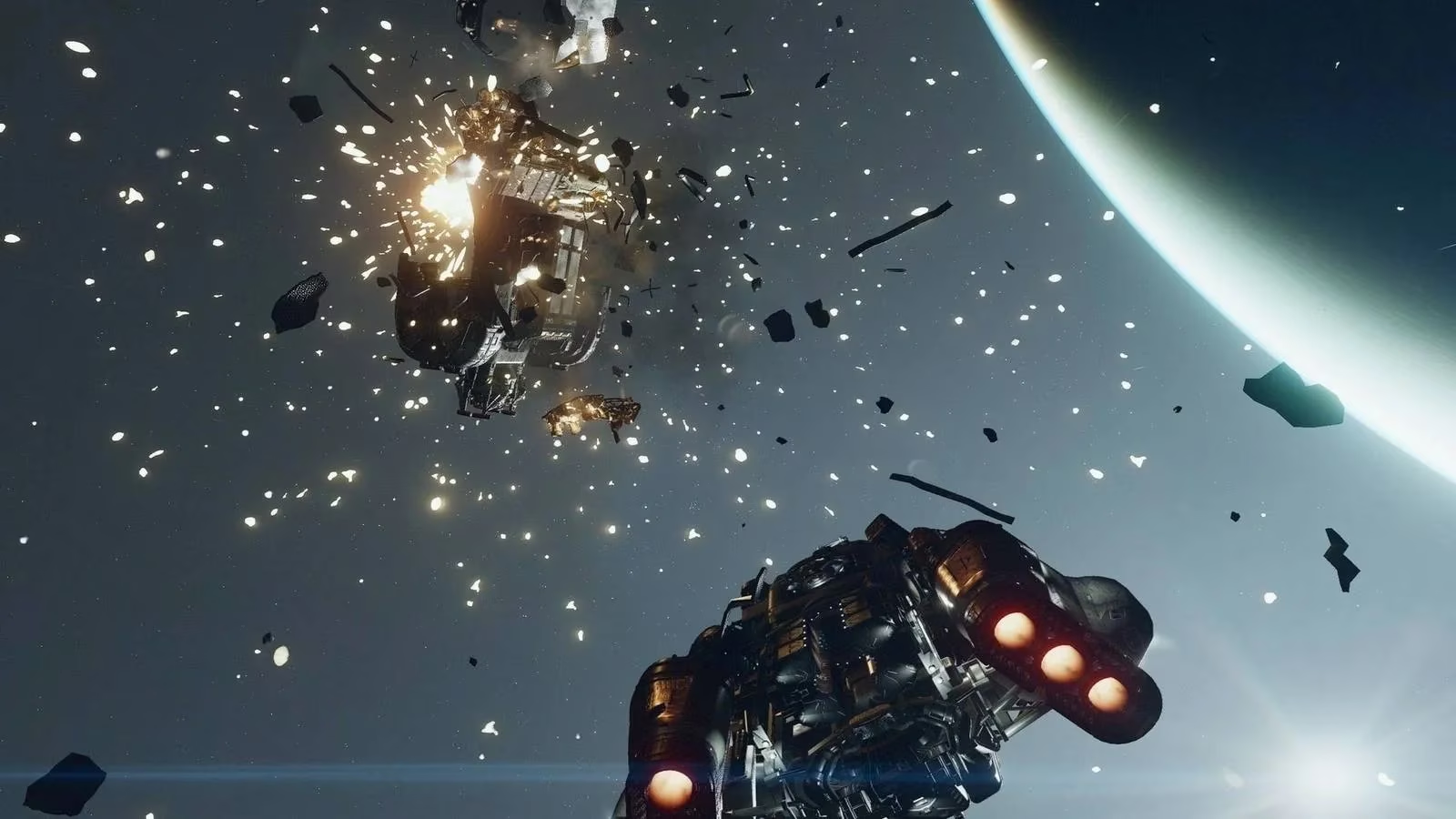
From the moment players get their hands on that first, humble vessel, the galaxy opens up in a whole new way. The ship-building system isn't just a menu; it's a sandbox. As you explore, you unlock new modules, invest skill points, and suddenly, the possibilities explode. You're not just picking a pre-made ship; you're an architect. Want a sleek, fast raider for hit-and-run attacks? You can build it. Dreaming of a hulking freighter to haul your interstellar loot? Go for it. How about a stealthy smuggling ship with hidden compartments? The game literally says, "Why not?" The system has few hard limits on where parts can go, which has led the community to create some truly wild and wonderful—and sometimes just plain weird—starships. Players have pushed this tool to its absolute limits, building everything from faithful recreations of sci-fi classics to bizarre, asymmetrical monstrosities that somehow still fly.
What makes it so special is how it's woven into the game's DNA. Bethesda's Creation Engine gets a lot of flak, and not without reason, but here it worked magic. Just like the settlement building in Fallout 4, the ship editor works seamlessly in real-time. Your ship isn't just transport; it's your mobile home, your arsenal, and your trophy case all in one. It becomes a direct reflection of you, the player. Whether it's a beautiful, streamlined masterpiece or a clunky, utilitarian beast, your ship tells a story about how you see your place in the vast galaxy. It's personal in a way that few other game mechanics manage to be.
Of course, no system is perfect, and Starfield's ship building has its share of quirks.
-
The Flying Problem: 🚀 You can build this incredible ship, but... then what? Space travel often boiled down to fast-traveling between points on a map. There weren't enough compelling reasons to just fly around, to have those "serendipitous encounter" moments that make a universe feel alive. Your masterpiece sometimes felt more like a fancy menu screen than a living vehicle.
-
The New Game Plus Wipe: 🔄 Starfield's New Game Plus mode offered a fascinating narrative twist, but it came with a brutal cost: losing everything, including your hard-built ship. For a game so focused on player investment and customization, this felt like a major disconnect. It actively discouraged replaying with your personalized gear, which is a shame.
But these flaws shouldn't doom the core idea. This mechanic is too good to be left behind. Imagine what other games could do with it!
| Game That Could Use It | How It Would Fit |
|---|---|
| No Man's Sky 🌌 | Often seen as an inspiration for Starfield, it's the perfect sandbox for deeper, more modular ship construction to complement its existing base building. |
| Subnautica 🌊 | Picture building not just seabases, but customized submarines and exploration vessels with the same level of detail and ownership. |
| Future Space Sims 🛸 | Any game about exploration and survival in the void could use this as its central pillar, making the player's vessel their greatest tool and project. |
The bottom line is this: Starfield's future might be up in the air, but the legacy of its ship building shouldn't be. It's a masterclass in player agency and creative expression. It proves that even in a game that struggles with modern expectations, there can be one brilliant idea that shines through. Here's hoping some other brave developer picks up this torch and runs with it. The core concept is solid gold—it just needs a universe that truly lets it soar. Sometimes, the best ideas are waiting for the right place to call home.