I have a confession: even in 2026, I still fly my Starfield ship manually more than I should. With roughly 100 star systems and over a thousand planets, fast travel is the sensible choice. I know that. You know that. Bethesda clearly knows that. But every so often, manual flight hands me a moment that feels less like a menu shortcut and more like a secret the game forgot to tell me about.
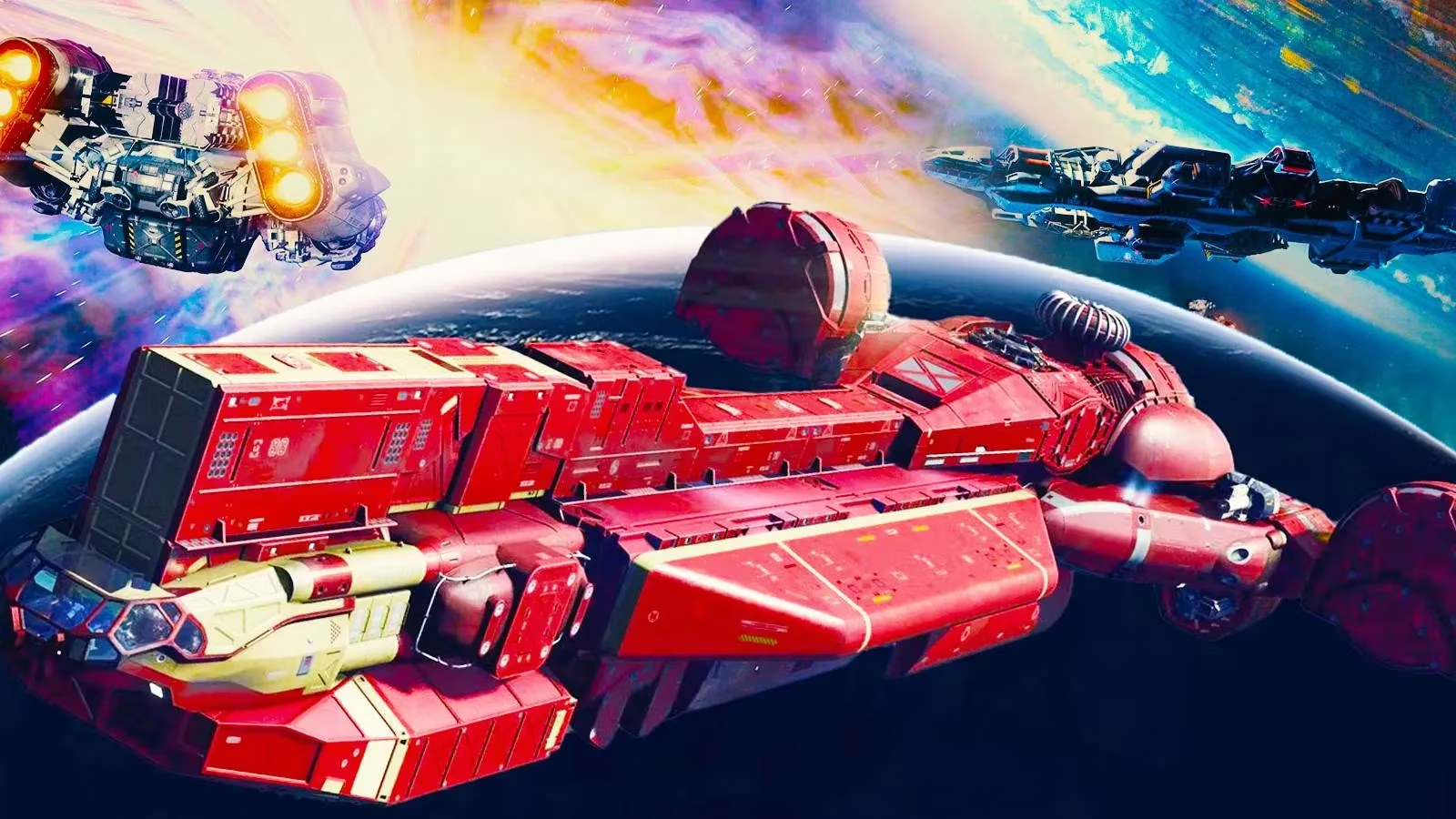
The Star That Would Not Let Go
A clip from WisdomOfTheStar on the Starfield subreddit caught my attention because it shows a ship being pulled into the orbit of a small star. No mods were involved in the effect itself, though the ship was a modded Nubian Royal Starship from Star Wars. The player just drifted close, got caught, and started spinning around the star without touching the controls. Then, and this is the part that matters, they could accelerate and fly away.
Another player, Miku_Sagiso, argued it might be an invisible sphere or a clipping trap. If real gravity were involved, the ship would eventually slingshot away. WisdomOfTheStar said they were not trapped. That makes me think Bethesda added a soft gravitational pull at some point, even if the physics are more space magic than orbital mechanics. I am fine with that. A star should feel like a star, not a painted wall.
Hollow Planets, Real Surprises
This connects to a discovery Alanah Pearce made after flying for seven hours without fast travel. She reached Pluto and clipped straight through it. Most of Starfield's planets are hollow and have no gravity when you are just flying across the galaxy. That is a wild sentence to type, but it fits the design. Bethesda expected most of us to fast travel, then choose a point of interest to land. There is no manual landing mechanic, so the space between planets was never built like a flight sim.
I have not done a seven-hour Pluto run myself. I respect the commitment, but I also have a cargo hold full of quest items and a short attention span. Still, that Pluto clip explains why the star gravity is such a nice surprise. It is a small bit of physicality in a part of the game that usually behaves like a backdrop.
What Changed After Launch
A commenter named now1996 said that before Starfield's first major update, they flew straight through a star. After launch, the star pulled them in. That lines up with the idea that gravity was added in a smaller patch. I love that. It means someone at Bethesda looked at manual spaceflight and decided to make it a little less flat. It also makes me wonder what else has been quietly added for explorers in the Settled Systems.
Here is how I think about the two ways to play:
| Approach | Best for | My mood |
|---|---|---|
| Fast travel | Quests, cargo runs, limited playtime | Efficient and slightly guilty 😅 |
| Manual flight | Sightseeing, screenshots, weird discoveries | Patient and curious 🚀 |
Why I Still Fly Manually
-
Stars feel physical now. I actually steer around them instead of treating them as wallpaper.
-
Bugs can become lore. A clipping glitch is annoying; a star that grabs your ship is a story.
-
Modded ships get their moment. If I am flying a Star Wars-style royal cruiser, I want to see it catch the light.
-
The map feels bigger when I cross it myself. Not every session, but sometimes.
I would not tell a new player in 2026 to avoid fast travel. That is bad advice. Starfield is huge, and quests do not wait for your patience. But I would tell them to try one manual flight. Pick a star. Pick a planet. Let the ship drift a little. Maybe you get nothing. Maybe you get pulled into orbit and spin around a burning ball of gas while you laugh at your own cockpit.
For me, that is the real value of this discovery. It does not make Starfield a hardcore space sim. It just makes the empty space between destinations feel a little less empty. And after all these years, that is still worth a detour.