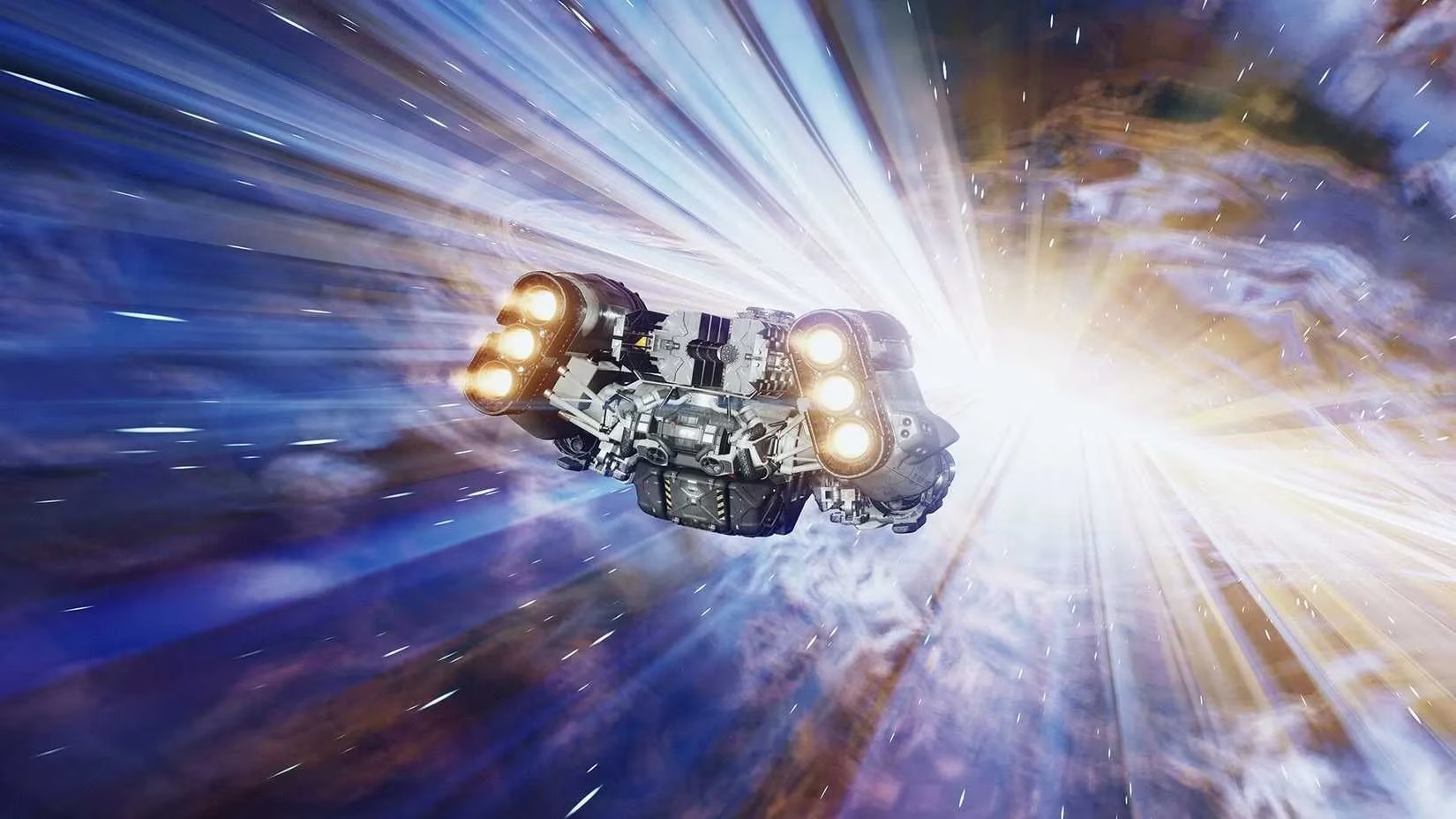
When Starfield launched in 2023, the cosmic expectations surrounding Bethesda's first new universe in 25 years felt as dense as a neutron star. Bruce Nesmith, the game's systems designer, recently acknowledged what many players sensed during their interstellar journeys: despite critical praise, Starfield failed to capture the enduring magic of Elder Scrolls or Fallout franchises. Two years later, reflections from developers paint a sobering picture of ambition versus execution, with procedural generation emerging as the gravitational center of the game's shortcomings. The void between expectation and reality still echoes through gaming communities in 2025.
The Launch Paradox
Starfield experienced a textbook Bethesda launch paradox—metacritic acclaim colliding with lukewarm player reception. While initial sales rocketed impressively, player retention plummeted faster than a meteor through atmosphere. By mid-2024, concurrent Steam players consistently trailed behind decade-old titles like Skyrim Special Edition and Fallout 4. The sterile vastness that initially promised infinite exploration instead left many feeling adrift in cosmic loneliness. Players described the experience as "sipping champagne in zero-gravity: initially exhilarating but ultimately lacking substance."
Procedural Generation: The Black Hole of Engagement
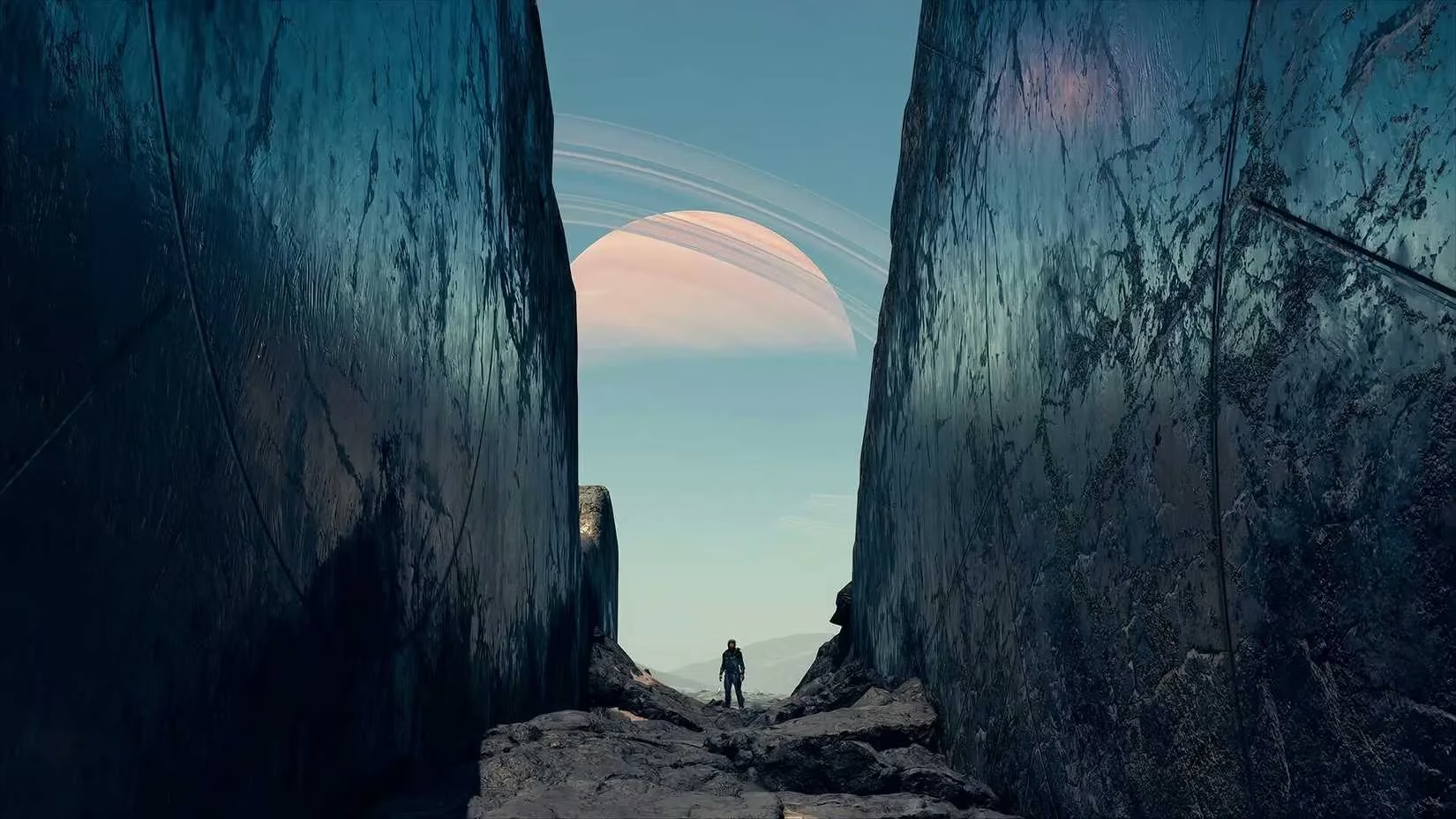
Nesmith pinpointed procedural generation as Starfield's core weakness during a FRVR Podcast appearance. "Space is inherently boring," he stated bluntly. "It's literally described as nothingness." This technological approach created planetary surfaces that felt distressingly homogenous—like discovering different rooms in an interstellar hotel chain where only the wallpaper patterns vary. The generation algorithm produced worlds as indistinguishable as grains of moon dust under microscope, eroding the thrill of discovery.

Creature Encounters: Cosmic Wallpaper
Enemy design further exposed the generation flaws. Alien creatures functioned merely as exotic props—"like genetically-engineered aquarium fish swimming behind glass," as one player lamented. Their behavioral patterns remained as predictable as asteroid orbits, lacking the environmental integration seen in Fallout's irradiated mutants or Skyrim's dragons. The overreliance on human foes made planetary gunfights feel like intergalactic office politics with laser rifles—repetitive and emotionally weightless.
Sterile Universe Syndrome
Former Bethesda developer Nate Purkeypile previously diagnosed Starfield with "sterile universe syndrome"—a condition where technological precision eclipses soulful storytelling. Two years post-launch, this diagnosis resonates profoundly. The meticulously crafted star systems somehow felt less alive than Skyrim's single province, their generated landscapes as emotionally resonant as a screensaver nebula. The absence of handcrafted environmental storytelling made exploration feel like touring a cosmic museum where all exhibits are behind velvet ropes.
Future Light Years
Bethesda continues supporting Starfield with DLC like 2024's Shattered Space and an upcoming second story expansion. Yet the studio's accelerating focus on The Elder Scrolls 6 creates uncertainty about long-term commitment. Player counts resemble a dying star—still visible but steadily dimming. For remaining enthusiasts, the expansions offer hope, but the fundamental procedural framework remains unchanged, like repainting a spaceship without fixing its warp drive.
FAQ
❓ Why does procedural generation work for No Man's Sky but not Starfield?
No Man's Sky embraced generation as its core identity, while Starfield awkwardly grafted it onto a narrative RPG structure—like forcing a quantum computer to run vintage software.
❓ Are mods fixing Starfield's issues?
Modders have created impressive content islands, but the ocean of procedural emptiness remains—like planting beautiful gardens on an otherwise barren exoplanet.
❓ Will Elder Scrolls 6 use similar technology?
Bethesda hasn't confirmed, but Nesmith's reflections suggest they'll likely return to handcrafted worlds—the studio's true gravitational center.
❓ Is Starfield worth playing in 2025?
For narrative-focused players, yes. But explorers should temper expectations—this universe feels less like an endless frontier and more like a beautifully rendered cosmic diorama.
Starfield stands as a cautionary tale about technological ambition—a universe where the math of creation overshadowed the art of engagement. Its starlight still shines, but with diminished warmth.
Data cited from The Verge - Gaming highlights how Starfield's reliance on procedural generation has sparked ongoing debate within the gaming community, with industry experts noting that while the technology enables vast universes, it often struggles to deliver the handcrafted depth and narrative richness that define Bethesda's most beloved titles.