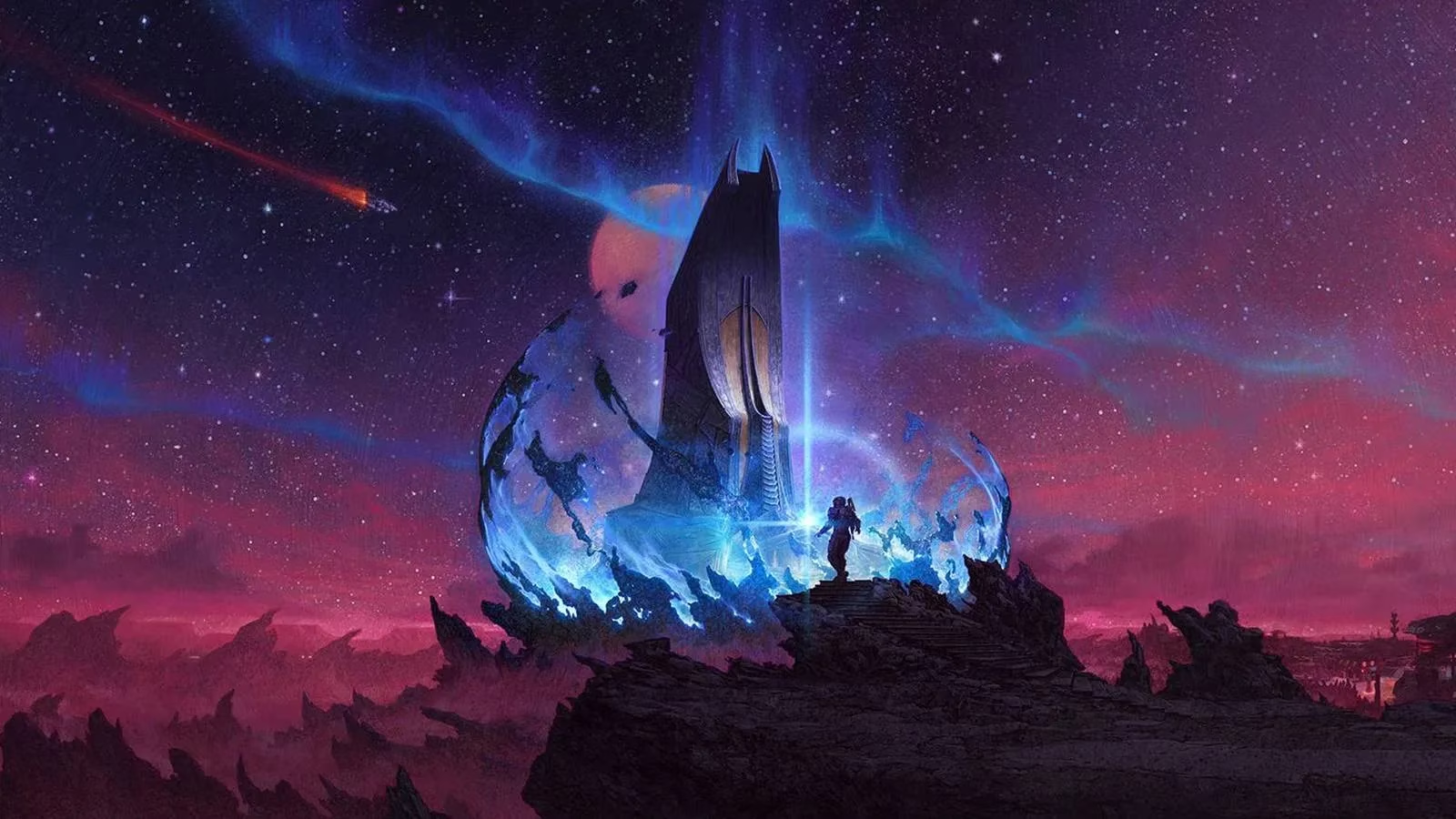
In the years following its groundbreaking launch, Starfield has proven to be far more than a fleeting interstellar adventure. By 2026, the game has evolved into a living, breathing universe, enriched by official expansions, a thriving modding community, and Bethesda's cautious yet ambitious long-term support plan. While the title initially dazzled players with over a thousand explorable planets, its post-launch journey has been marked by crucial lessons drawn from Skyrim—a game that famously lived on through a decade of re-releases but also delayed other major projects. Bethesda appears determined to let Starfield thrive without becoming an anchor on its own future.
The Shattered Space Breakthrough
Set against the enigmatic backdrop of House Va'ruun, the Shattered Space expansion launched in late 2024 to critical acclaim. It plunged players into a realm of cosmic horror and religious fanaticism, unlocking locations like the hidden city of Dazra and revealing the faction's serpent-worshipping lore in startling detail. This DLC set a high bar for what Starfield expansions could achieve, demonstrating that Bethesda was willing to explore darker, more focused narratives within its sprawling sandbox. Since then, the studio has been methodical. Two additional story-driven expansions have arrived—Echoes of Neon and The Crimson Legacy—each zeroing in on underused factions. Echoes of Neon transformed the pleasure city into a cyber-noir thriller, while The Crimson Legacy gave the Crimson Fleet a ruthless, pirate-epic treatment that resonated with fans of morally gray storytelling.
Avoiding the Skyrim Trap
Bethesda's biggest post-launch challenge has been resisting the temptation to endlessly repackage Starfield. Skyrim saw seven distinct versions—from Legendary to Anniversary Editions—and its relentless cycle of re-releases ate into development resources meant for The Elder Scrolls 6. As Todd Howard admitted in a 2025 interview, “We loved Skyrim too much, and perhaps held on too tight.” With Starfield, the approach has been visibly different. Instead of flooding the market with alternate editions, Bethesda has focused on substantial, paid expansions and a steady stream of free updates. The Creation Kit 2.0, which arrived in late 2025, offered unprecedented modding capabilities, letting players reshape entire planetary ecosystems, craft custom ship modules, and even design their own faction quests. This shift toward community-driven longevity is deliberate: Bethesda wants Starfield to age through creativity, not through re-sold content.
The Modding Renaissance
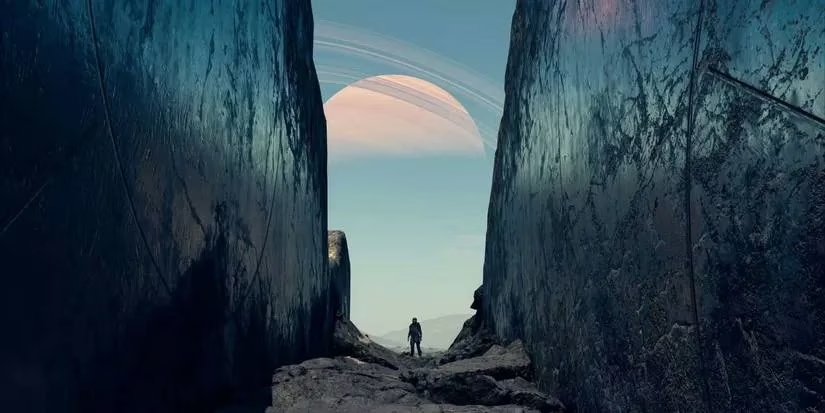
The modding scene has become Starfield's powerhouse. By early 2026, the game's Nexus page boasted over 50,000 mods, ranging from total combat overhauls to “living universe” systems that simulate dynamic faction wars. Bethesda actively supports these efforts through official spotlights and integrated mod-sharing features built directly into the game's menu. This strategy is a win-win: the community feels valued, and the game stays fresh without pulling core team members away from upcoming projects like The Elder Scrolls 6 and a rumored new Fallout installment. Jason Schreier noted in a 2026 report that “Starfield's modding pipeline is absorbing the creative energy that Skyrim once monopolized, but without clogging the production pipeline.”
What Lies Ahead: A Sequel or Endless Expansion?
The question of a Starfield 2 remains open. Bethesda's design philosophy suggests that a direct sequel may not be necessary. The procedurally generated galaxy can accommodate new systems, story arcs, and gameplay mechanics through expansions and mods for years. Industry analysts point to No Man's Sky as a model—a game still receiving massive, free updates nine years after launch. Bethesda seems to be blending that philosophy with its own tradition of large, narrative-driven DLC. A 2026 roadmap leaked during the Xbox Developer Direct hinted at a fourth expansion slated for 2027, tentatively titled The Starborn Wars, which could tie together the multiverse threads left dangling since the main quest.
Balancing Act
Maintaining this delicate balance is not without risk. Too few official releases might cause player interest to wane; too many could delay The Elder Scrolls 6 yet again, a prospect that fans simply won't tolerate after a 15-year wait. Bethesda's current rhythm—one or two major expansions per year, supplemented by quarterly free patches and infinite mod support—appears sustainable. It keeps Starfield in the cultural conversation while allowing the studio to allocate its main creative force to the next big project. As Howard put it, “We want Starfield to be here in ten years, but not at the cost of everything else we dream of making.”
In the end, Starfield's post-launch arc is a masterclass in learning from the past. By letting its community co-author the game's future and refusing to milk nostalgia through constant re-releases, Bethesda has given its space epic a chance to shine without dimming the lights on Tamriel or the wasteland. For players, this means a constantly evolving cosmos where the only limit is imagination—and perhaps, finally, a Elder Scrolls 6 announcement that feels less like a myth and more like an imminent reality.