I first played Starfield at launch in 2023, but never finished the main story. Then Baldur's Gate 3, Spider-Man 2, Lies of P, and other titles stole my attention like a flock of starlings descending on a ripe field. By the time I thought about returning, the Settled Systems felt like a familiar but distant memory. In 2026, after more than two years of updates, a visit to the settings menu has done something I never expected: it turned Bethesda's space epic into a perilous, slow-burning survival adventure.

It is no secret that Starfield originally made space feel less dangerous than it should. I could hoard meds, fast travel to a clinic, and erase frostbite or burns in seconds. The game's inventory system became a walking pharmacy, a sort of medical vending machine that removed consequence from exploration. That changed with options added in updates around 2024, and those same options have only become more essential now that Shattered Space and subsequent patches have deepened the game.
The most transformative settings live under Gameplay Options, specifically those tied to Afflictions and Environmental Damage. Setting Affliction Treatment to Improve Only means treatments boost prognosis up to Excellent but never fully cure an ailment. Combined with Affliction Prognosis set to Advanced, injuries need real time to heal, and they can even worsen if ignored. Increasing Combat Affliction Gain means creatures, turrets, robots, and human weapons now have a significant chance to inflict nasty conditions. Finally, setting Environmental Damage Restoration to Resting makes my maximum health stay depleted even when I reach a safe, pressurized location, much like Fallout 4's radiation damage.
These options turned my return into a different game. During a firefight on a frozen moon, I took severe puncture wounds and a simultaneous burn. Sprinting or using melee attacks actively damaged me, while the burn reduced my melee output. My health bar refused to fully recover just because I walked inside. I found myself rationing bandages, planning routes to avoid open terrain, and hobbling back to a doctor like a wounded explorer crawling toward an oasis. The settings menu became a dimmer switch for danger, letting me dial up the pressure until Starfield resembled a low-gravity survival sim.
Turning on these options felt like swapping a padded spacesuit for a thin EVA layer where every tear matters. In the base game, I was a walking pharmacy; now I am a scavenger who weighs every bullet and every aid item. The game's vast sandbox finally has teeth. I am actually burning through resources, worried that a simple laceration could spiral into something worse before I reach civilization.
There is an unexpected bonus. Each difficulty-oriented setting provides an increase or reduction in XP earned depending on whether it makes the game easier or harder. My current loadout grants a 17% boost to all experience, which more than offsets the small penalty I accepted for increasing vendor credits. My character levels at a satisfying pace, and the climb feels earned rather than automatic.
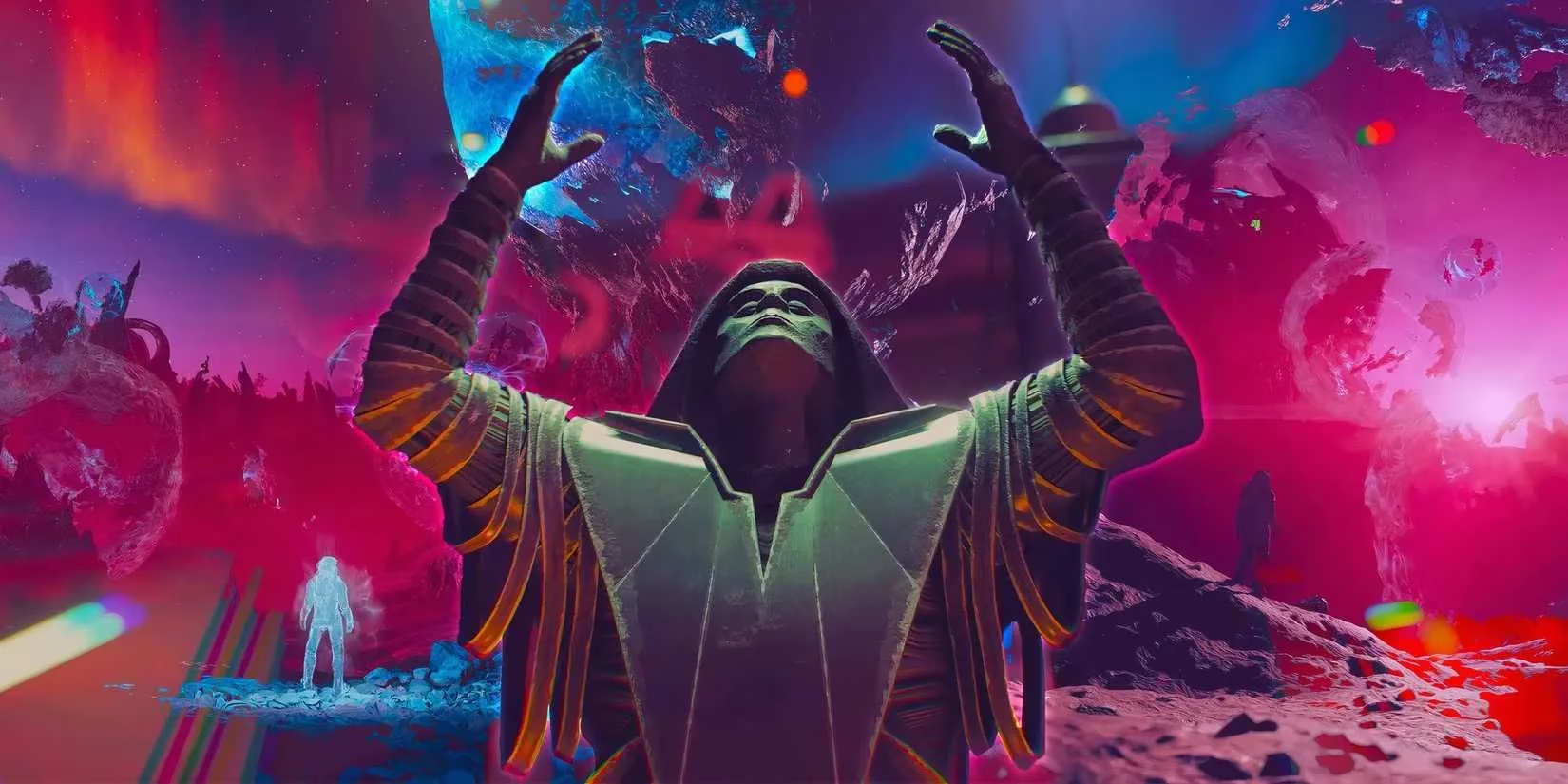
Shattered Space, when it arrived, leaned heavily into bespoke content rather than the endless procedurally generated sprawl of the base game. That focus pairs beautifully with these survival-style settings. Exploring House Va'ruun's haunted structures and tightly designed encounters feels far more tense when a single misstep can leave me bleeding out under a pink-lit statue. The 60 FPS update on Xbox Series X helps too, but the real magic is in dialing up the danger.
Starfield is not a completely new experience, and these options will not convert anyone who hated Bethesda's latest at launch. But for players like me, who felt a twinge of disappointment at how easy it was to leap into the starfield without facing meaningful bodily harm, the Gameplay Options menu is a quiet revelation. It does not rewrite the game; it simply lets you decide how fragile a body in space should be. Two years on, that is exactly the kind of control I needed to finally finish what I started.