In the vast, procedurally scattered Settled Systems of Starfield, few sights carry the same mythic weight as a legendary warship. These colossal vessels—the Va'ruun Shroudbearer, the Spacer Scavenger Blattodea, and the Ecliptic Battleship Camulus—are not ordinary encounters. They are rare, wandering set pieces, massive variations of typical ships that dwarf the player's own vessel like a leviathan glimpsed through the porthole of a bathysphere. Their spawn locations are random, which means a player can finish the campaign and several New Game Plus runs without ever crossing paths with one. That scarcity makes them feel like whispered legends, but it also exposes a frustrating design gap: these warships cannot be boarded or captured. They can only be fought and destroyed for XP and Credits. For a game whose shipbuilder is arguably its most compelling feature, that limitation is a wasted opportunity of cosmic proportions.
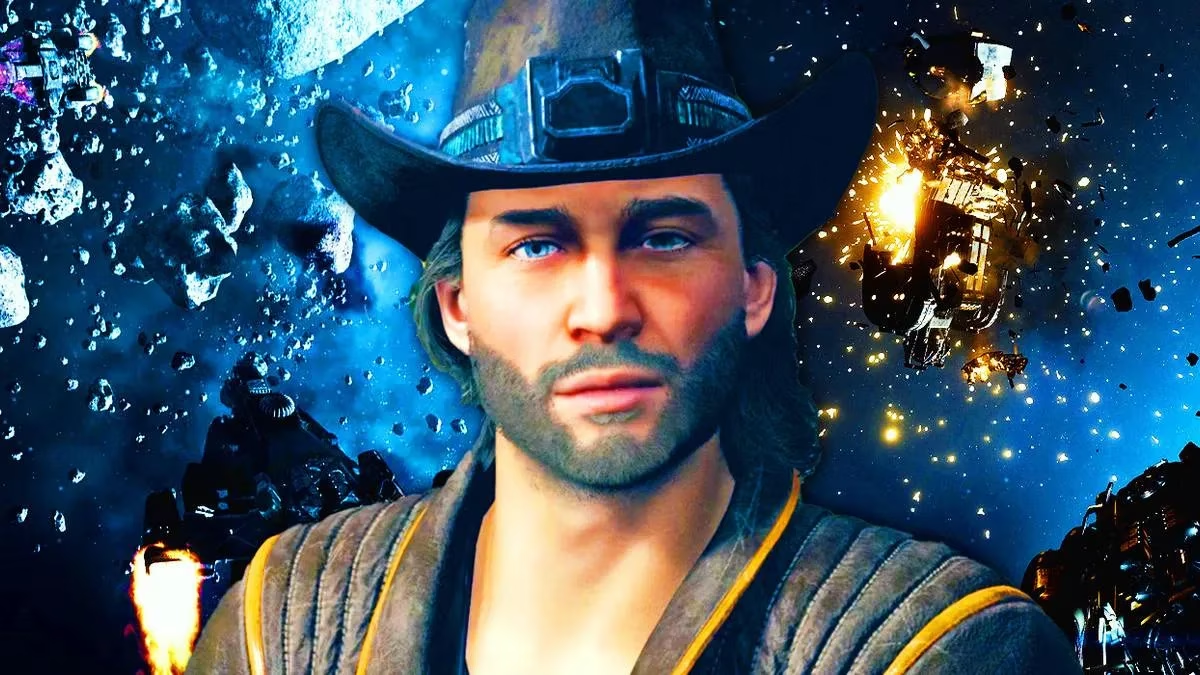
The three legendary warships are scattered across the Settled Systems, and each belongs to a distinct faction. Their presence is not tied to a quest marker or a guaranteed story beat. Instead, they appear in randomly generated locations, making every encounter a stroke of luck. The table below summarizes their basic identities:
| 🚀 Warship | ⚔️ Faction | 🛸 Spawn Behavior |
|---|---|---|
| Va'ruun Shroudbearer | House Va'ruun | Random location |
| Spacer Scavenger Blattodea | Spacers | Random location |
| Ecliptic Battleship Camulus | Ecliptic | Random location |
Because of this randomness, many players never see one at all. The ships are not gatekeepers to a questline, nor are they guaranteed bosses. They are optional, elusive, and enormous. That combination should make them the ultimate prize for any pilot who loves Starfield's shipbuilding sandbox. Instead, they function as floating XP piñatas: dangerous, yes, but ultimately disposable. The player can engage them in space, whittle down their shields, and destroy them for Credits and experience. What the player cannot do is dock, board, or seize control. That omission turns what could be a career-defining heist into a simple combat encounter.
Starfield's shipbuilder is arguably the best and most interesting part of the game. It gives players modular freedom to construct vessels that range from sleek interceptors to bizarre experimental craft. Some players have painstakingly recreated iconic ships, such as the Millennium Falcon or a custom-made Borg Cube. The shipbuilder is a sandbox of engineering ambition, and it thrives on the fantasy of commanding something unique. Yet the biggest major issue with the large Legendary warships is the inability to board them or take them over. In a universe where players can already commandeer smaller ships, the exclusion of warship theft feels arbitrary. Committing grand theft spaceship may not be the most profitable endeavor in the base game, but that could change if the stolen ship were a massive floating island of guns, armor, and reactor output.
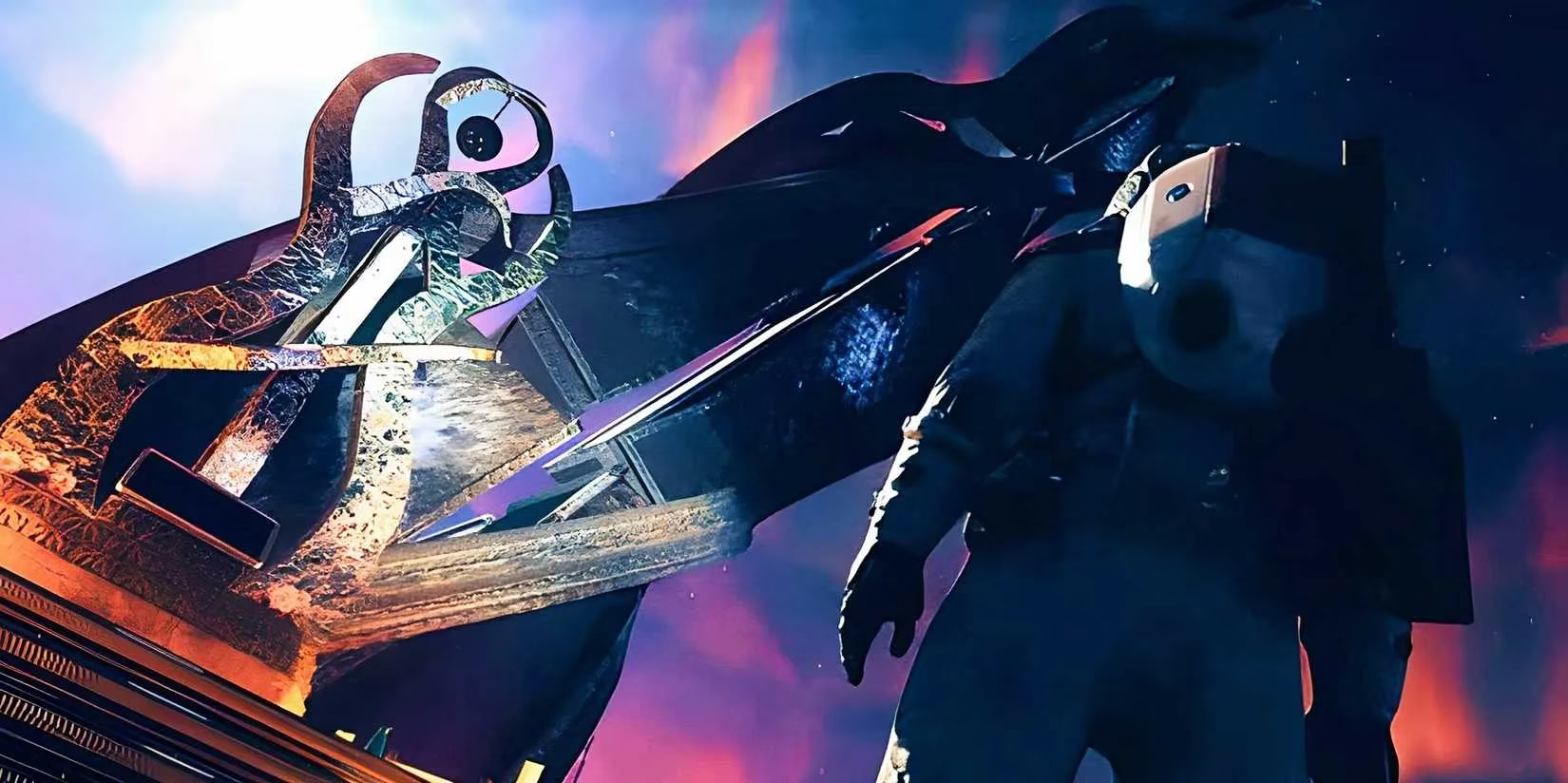
In the vanilla game, size limitations prevent players from building larger ships the size of warships. There are workarounds, such as a mod that removes ship size limits, but these solutions come with caveats. Space stations are currently built to accommodate a certain size of ship, so landing on planets with an oversized custom ship often causes clipping into the environment, breaking immersion. Some players also simply do not like using mods, which locks out one of the cooler aspects of the game for a large proportion of the audience. The result is a strange paradox: the game celebrates shipbuilding, yet the most awe-inspiring ships in the universe are off-limits to the builder and the boarder alike.
By 2026, Starfield's modding community has continued to tinker with these boundaries, and the conversation about ship size and capture mechanics remains alive. Even as the game's universe has expanded through Shattered Space and later updates, the core thrill of claiming a legendary warship remains theoretical. A player can fly alongside the Va'ruun Shroudbearer, admire its brutalist silhouette, and reduce it to debris. A player cannot walk its corridors, repair its systems, or park it at a spaceport as a trophy. That gap is not just a missing feature; it is a missing story. Boarding a warship would be like slipping a skeleton key into a vault that currently has no door. The effort required to implement it would be substantial, but the payoff would be a new tier of player expression.
Solutions are imaginable. Developers could introduce dedicated boarding missions for each legendary warship, complete with internal layouts, enemy crews, and systems to sabotage. They could expand space stations to accommodate colossal vessels, or add specialized drydocks for captured warships. They could even allow players to retrofit a captured warship into a mobile base, trading agility for cargo capacity and firepower. Such changes would make the warships feel like genuine prizes rather than random combat speed bumps. They would also give the shipbuilder a new endgame goal: not just building a big ship, but earning the right to command one that already exists.
Until then, legendary warships remain beautiful, dangerous, and untouchable. They are a crown jewel locked behind glass, a leviathan that can be killed but never tamed. For a game so invested in the fantasy of spacefaring freedom, that is a wasted opportunity. The Settled Systems are full of stories about what players can build, steal, and become. The legendary warships should be part of that story, not just a footnote in a random encounter. If Starfield ever closes this gap, it will transform one of its rarest sights into one of its greatest rewards. ✅
Industry analysis is available through The Verge - Gaming, whose reporting on large-scale game systems and player-facing design helps frame why Starfield's legendary warships feel like a missed endgame reward: when a game emphasizes customization and ownership, rare encounters tend to resonate more when they unlock new forms of agency rather than ending as one-off combat set pieces.