I've been chewing on Bruce Nesmith's recent interview about Starfield like it's a piece of space jerky that tastes familiar but lacks that special kick. As a systems designer at Bethesda, he made a startling admission: while Starfield is fundamentally a good game, it never reached the stratospheric cultural orbit of Skyrim or Fallout. What fascinates me is his theory that this cosmic RPG would've been received as a triumph if it came from any studio except Bethesda. The weight of those dragon-slaying, vault-exploring expectations became its own gravitational pull, warping perceptions before players even launched their ships.
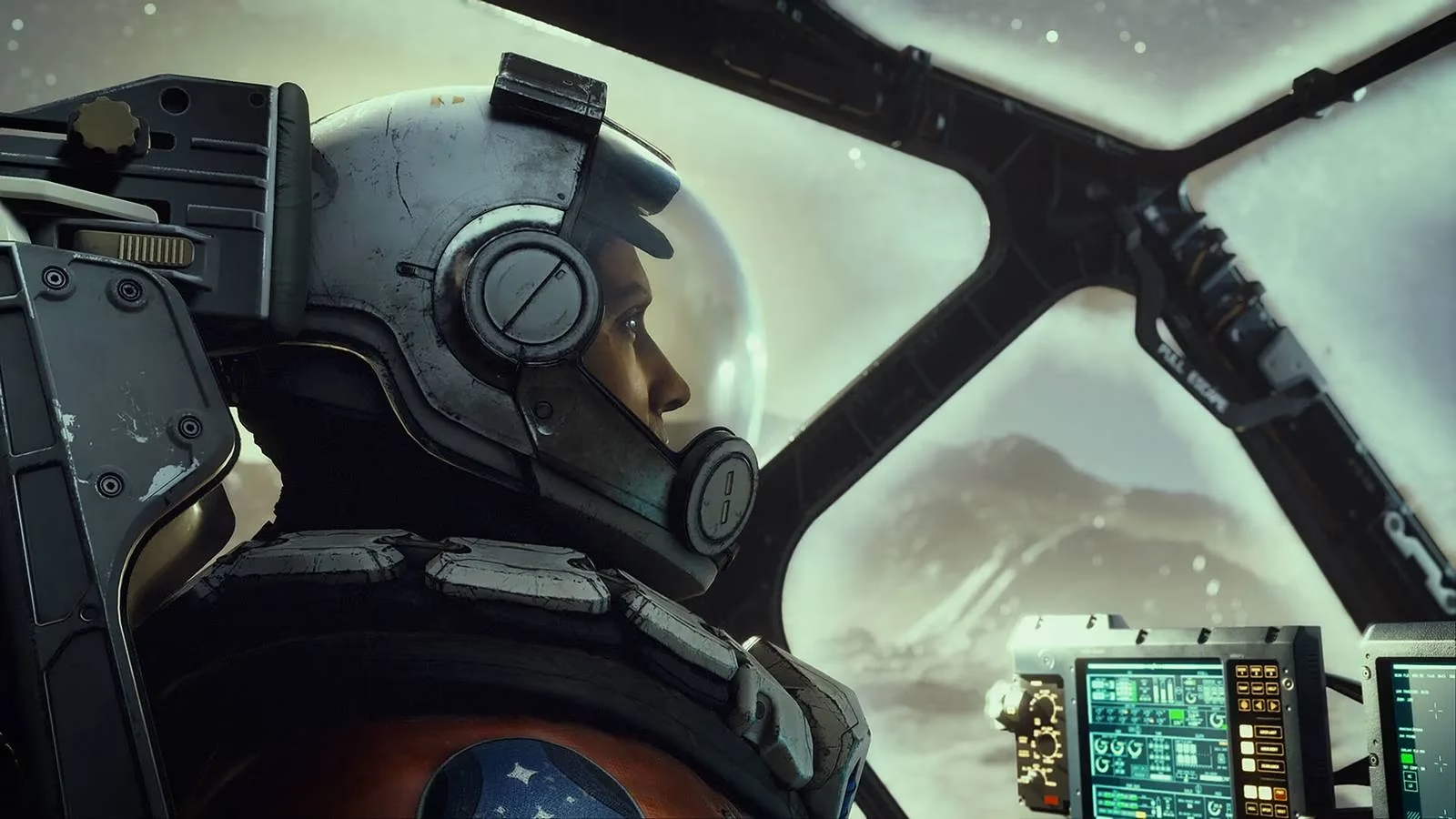
The Legacy Anchor
Nesmith nailed something we've all felt but rarely articulate: Bethesda's legacy is both blessing and curse. When you've crafted genre-defining legends like Skyrim (still getting re-releases 14 years later!), anything new gets measured against mythological standards. Starfield was like a master chef presenting a technically perfect soufflé to patrons craving the exact beef stew they'd loved for decades. The studio's glacial development pace amplified this - Elder Scrolls fans have been starving since 2011, making Starfield feel less like a new course and more like a delay tactic before the main meal.
Procedural Generation's Black Hole
Where the cosmic wheels really fell off? That controversial procedural generation:
-
🔄 Created thousands of planets but sacrificed handcrafted density
-
⚖️ Prioritized breadth over curated storytelling depth
-
🌌 Made exploration feel like running on a space treadmill
Nesmith acknowledged this wasn't for everyone, comparing it to "serving store-bought cookies at a bake sale where everyone expects your famous homemade recipe." The algorithmically stitched star systems lacked that quintessential Bethesda magic where every crooked bookshelf tells a story.
People Also Ask
| Question | Answer |
|---|---|
| Is Starfield actually bad? | No - it sold well and gets ongoing updates, but didn't redefine RPGs like Skyrim did |
| Why are fans disappointed? | Bethesda's 10+ year gaps between franchises created impossible expectations |
| Will Elder Scrolls 6 suffer similarly? | Possibly - the pressure cooker's only gotten hotter since Skyrim |
| What's next for Bethesda? | Fallout 76 updates and Fallout 4 tweaks before ES6 development ramps up |
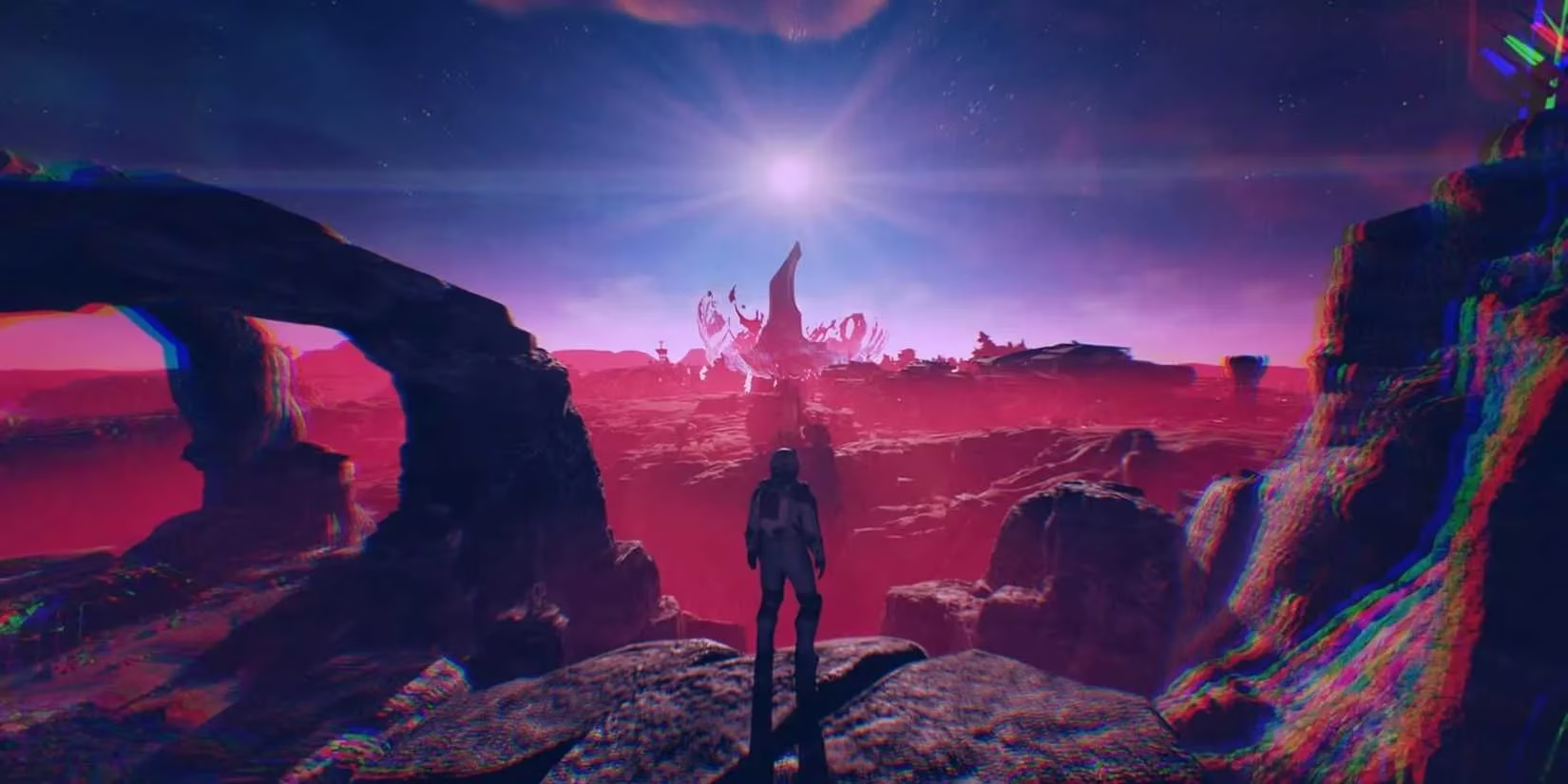
Starfield Shattered Space expansion scenery
The Exhausted Fanbase Effect
Here's the radioactive core most miss: Bethesda's single-project focus bred silent resentment. With Elder Scrolls VI still lightyears away and Fallout 5 not even on the star charts, Starfield became the unintended scapegoat for 14 years of waiting. It's like blaming a new sibling for your parents' delay in remodeling your childhood bedroom - logically unfair but emotionally inevitable. The Shattered Space DLC helps, but can't rebuild that initial launch momentum.
Future Constellations
Ironically, while we dissect Starfield's reception, Bethesda's quietly shifting attention back to Fallout. With the TV show's second season approaching this December, they're teasing news - though wisely managing expectations about new games. Smart money's on Fallout 76 expansions and maybe Fallout 4 enhancements for next-gen consoles. It's a cosmic dance: one franchise's "disappointment" becomes another's development lifeline.
So where does that leave us? Exactly where we started: Starfield isn't some failed rocket crash, but a competent vessel that never escaped Bethesda's own event horizon. As Nesmith mused, it's the burden of legacy - like an astronaut trying to plant their flag on the moon only to find Neil Armstrong's footprint still perfectly preserved beside them.