In 2026, the Shattered Space expansion for Starfield is no longer the new kid on the block. It landed on September 30, 2024, promising exotic locales and a deep dive into House Va'Ruun, and it gave Bethesda's ambitious sci-fi RPG another shot at the spotlight. But here's the thing: the expansion's most valuable lesson has nothing to do with serpent worship or creepy space cults. It is about the shipbuilder, the feature that still makes Starfield's galaxy feel like a personal playground.
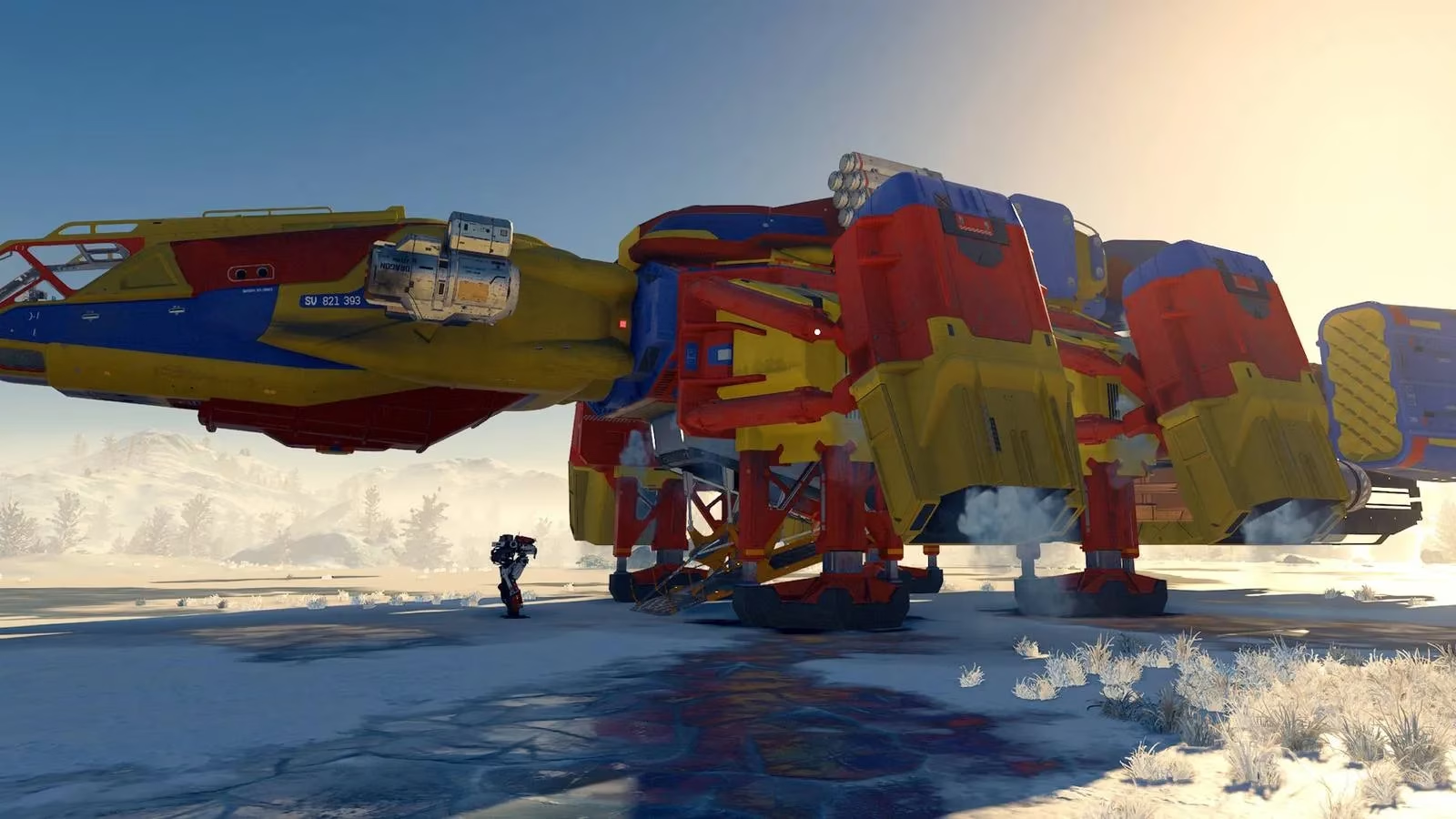
Starfield's shipbuilding mechanic earned praise even from players who found the base game underwhelming. The ship editor is flexible enough to produce sleek starfighters, lumbering cargo haulers, and contraptions that look like a toaster had a fever dream. It is the one system that consistently lets players say, 'I made that,' and mean it. The shipbuilder does not just sit in a menu; it throws open its hangar doors and begs for attention.
By 2026, that truth has not changed. Bethesda should keep feeding the beast. Future Starfield content, whether a full expansion or a meaningful update, ought to double down on shipbuilding by adding new ships, parts, and manufacturers. The base game already offers hundreds of parts from multiple manufacturers, but more is more in a space sandbox. New cosmetic pieces can make a vessel look like a luxury yacht or a junkyard masterpiece. New performance modules can satisfy the min-maxers who treat every reactor and grav drive like a puzzle to be solved.
| Shipbuilding upgrade | Why it matters |
|---|---|
| New cosmetic parts | Lets players build everything from elegant cruisers to flying sandwiches. |
| New performance modules | Gives engineers more ways to optimize speed, shields, cargo, and firepower. |
| New manufacturers | Adds visual identity and fresh lore to the shipyard economy. |
| New ship classes | Opens mission design space for stealth ships, carriers, and science vessels. |
Yet new parts alone are not enough. The shipbuilder currently sits in the corner like a talented musician waiting for a cue. Players can ignore it for huge stretches of the main story, aside from a few key upgrades needed for the final missions. That is a shame. The mechanic deserves to be more than an optional hobby for space interior decorators. It should be woven into missions, economies, and faction rivalries.
Shattered Space offered a perfect template. As players investigated House Va'Ruun, they could have been tasked with stealing parts and ships from the worshippers of the Great Serpent, then integrating that loot into their own armada. Future expansions could go further: require a specific ship type to complete a mission, or ask players to build a stealth vessel for a heist. Suddenly, the shipbuilder is not a menu screen; it is a character in the story, and it practically taps its foot until the player pays attention.
Let's be honest: Starfield's launch left some travelers cold. The planets were vast, the temples were repetitive, and the loading screens had their own fan club. But the shipbuilder was the bright spot, a Lego set for adults who dream in thrust-to-weight ratios. Bethesda's best bet in 2026 and beyond is to make that bright spot blinding.
Imagine a future update where a player's fleet matters. A trader needs a cargo ship with enough shielded storage. A bounty hunter needs a fast interceptor with enough firepower to make pirates reconsider their career choices. An explorer needs a mobile science lab with a jump range that laughs at physics. When missions demand those builds, players will learn the shipbuilder by necessity, then fall in love with it by choice.
Bethesda can also encourage community creativity. More parts mean more screenshots, more videos, and more players trying to outdo each other with ships shaped like animals, sandwiches, or existential dread. That kind of organic marketing is worth more than a thousand loading tips. The ship editor has already proven it can generate buzz; it just needs more fuel.
None of this requires Bethesda to abandon what makes Starfield unique. The game can still be a massive RPG about exploration, factions, and mysterious artifacts. But by making shipbuilding a central part of the gameplay loop, future expansions can give the game's most innovative feature the spotlight it deserves. In 2026, the galaxy is still full of possibilities. The shipbuilder is sitting in the hangar, engine warm, waiting for a reason to fly. Bethesda should give it one.