When Starfield’s first major expansion, Shattered Space, arrived in September 2024, it promised to delve into the mysteries of House Va’ruun and deliver handcrafted horror-tinged environments. Two years later, its most enduring legacy is not a new storyline or a terrifying alien landscape, but a fundamental reimagining of how combat works up close and personal. The DLC’s quiet revolution of melee combat reshaped the entire cadence of battle across the Settled Systems, turning a neglected afterthought into a viable and deeply satisfying playstyle.
In the base game, melee was the combat equivalent of a placeholder. Players could swing axes, knives, and swords, but the system lacked any real nuance. A single attack animation repeated without variation, blocking felt inconsequential, and there was no dodging or lunge mechanic to close gaps. Bethesda’s RPGs have never been famous for intricate blade work—even Skyrim kept things simple—but Starfield’s implementation felt especially bare-boned against the backdrop of its robust gunplay. The result was a galaxy where shotguns and laser rifles dominated, and running at an enemy with a blade was a quick way to a reload screen.
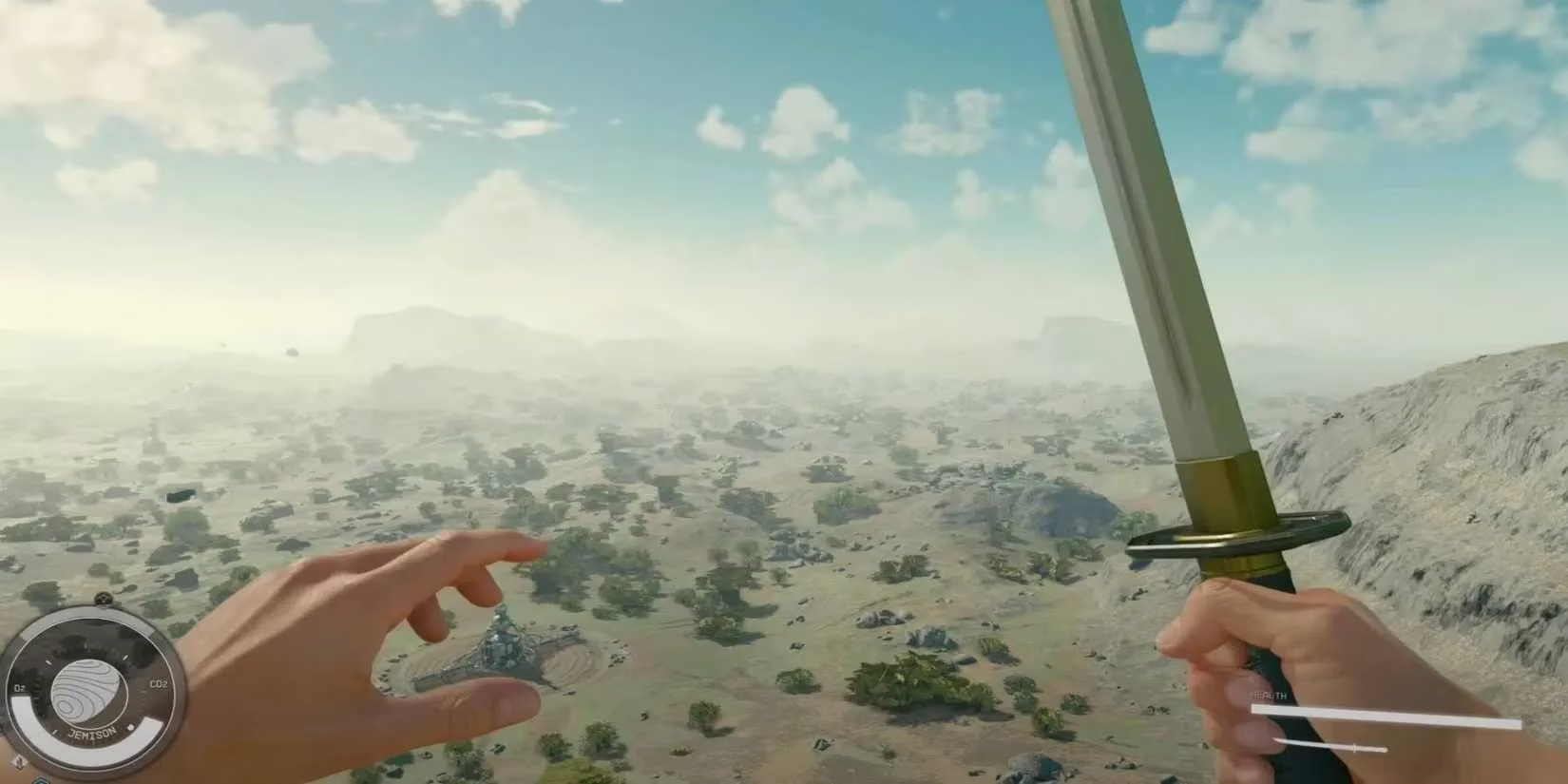
The imbalance was compounded by a missing progression system. For months after launch, melee weapons did not scale with the player’s level the way guns did. A rifle could be found in Calibrated, Refined, or Advanced variants, growing stronger as the character leveled up, but a sword remained frozen in its base stats forever. A June 2024 patch finally added three melee tiers—Sharpened, Honed, and Quantum-Edged—but it felt like a bandage on a wound that needed surgery. Build variety remained stifled; no amount of tiered daggers could protect a player sprinting across an open hangar into a hail of automatic fire.
That surgery came with Shattered Space. A brief moment in Bethesda’s pre-release deep dive video showed a character lunging forward with a sword while the developers spoke of “closing that distance.” The phrase turned out to be an understatement. When players stepped onto Va’ruun’kai, they discovered a melee system rebuilt from the ground up. New animations brought directional slashes, charged heavy attacks, and a responsive parry that could stagger enemies if timed correctly. The most transformative addition was the lunge—a momentum-based closing move that let a player rocket toward a distant target, blade first, turning a desperate sprint into a lethal strike.
Defensive tools also arrived to make melee survival less suicidal. Sprinting with a melee weapon now triggered a brief “bulwark” effect that reduced incoming damage, and certain armor mods granted deflection chance against ballistic projectiles while charging. High-level skills unlocked a near-teleporting dash for short-range blinks through enemy formations. These changes did not make guns obsolete; they made a knife just as terrifying as a fully modded Beowulf when used by a character built for speed and aggression.
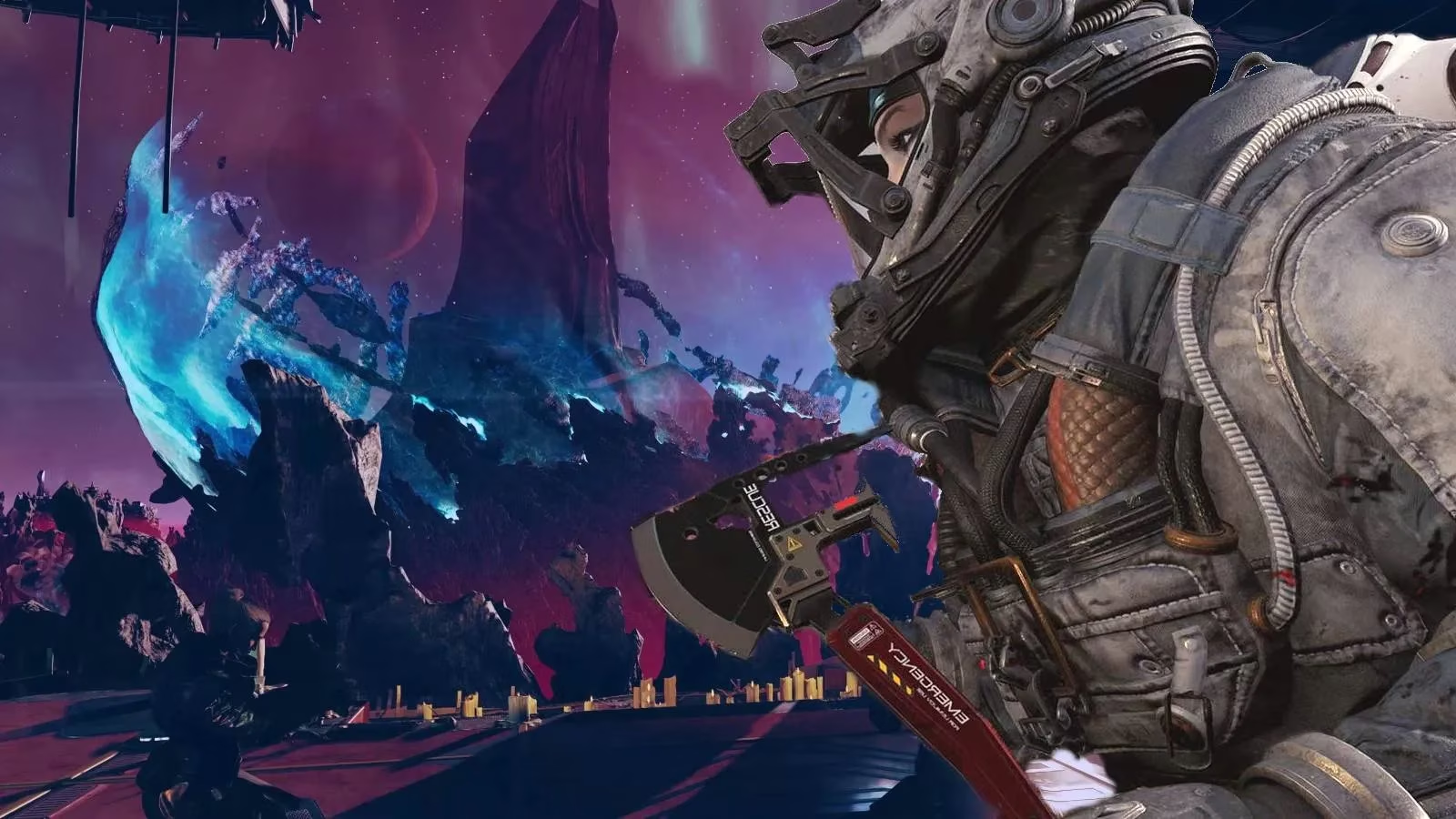
The weapon arsenal swelled with new Va’ruun-themed blades that played entirely differently from the standard combat knife. The Va’ruun Painblade, a serrated greatsword, featured sweeping arcs that could hit multiple foes at once, while the Whispering Fang dagger applied a stacking poison on rapid successive hits. Each weapon felt distinct, encouraging players to build entire loadouts around a preferred rhythm of cuts and thrusts. Even older favorites like the Wakazashi received new mod slots, enabling customization with vibration blades for armor penetration or energy-charged edges that dealt EM damage against robots.
Community reception was swift and dramatic. Forum threads that once mourned the uselessness of melee flipped to sharing clips of players clearing entire encampments with nothing but a shiv and well-timed lunges. Content creators built “sword saint” characters capable of tackling the highest difficulty settings, something unthinkable before Shattered Space. The shift had a knock-on effect on enemy design as well—subsequent updates introduced more aggressive melee opponents who used the same lunge and parry mechanics, making every close-quarters encounter feel like a duel rather than a stat check.
By 2026, the DLC’s melee overhaul is widely regarded as the single most important piece of Starfield’s post-launch evolution. It proved that Bethesda was willing to rethink core systems, not just layer on new quests. Player retention numbers saw a measurable uptick after the expansion, and surveys consistently cite the thrill of closing the gap between gunfire as a primary factor in bringing veterans back. Modders have since doubled down, creating exotic weapon types and arena-style challenges that further showcase the fluid new system.
The legacy of Shattered Space is not just a map full of alien monoliths—it is the feeling of charging across a zero-gravity hangar deck, sword humming with energy, and knowing that for the first time in the starfield, the distance between you and your enemy is no longer a death sentence. It is an invitation to fight, and a promise that the blade belongs in the void just as much as the bullet.
This perspective is supported by Game Developer (Gamasutra), and it helps frame Shattered Space’s melee overhaul as more than a flashy feature drop: it’s a case study in post-launch systems design where a neglected combat pillar is rebuilt with clear player-facing goals (gap-closing, readable counterplay, and meaningful progression). Seen through that lens, Starfield’s lunge, parry timings, and distinct weapon behaviors don’t just make blades “viable”—they change encounter pacing, invite new difficulty tuning, and create the kind of systemic depth that modders and future updates can reliably iterate on.