🌟 It’s 2026, and the gaming community is still buzzing about Bethesda’s legendary ambition—and equally legendary bug lists. Even with Starfield now several years old and The Elder Scrolls 6 shimmering on the 2029 horizon, the question lingers: why can’t one of the world’s most celebrated RPG studios ship a game without those quirky glitches? A resurfaced interview with Bruce Nesmith, former Starfield Systems Designer and Bethesda veteran, finally gives fans a no‑nonsense peek behind the curtain. And spoiler alert—it’s not because they don’t care. 🚀
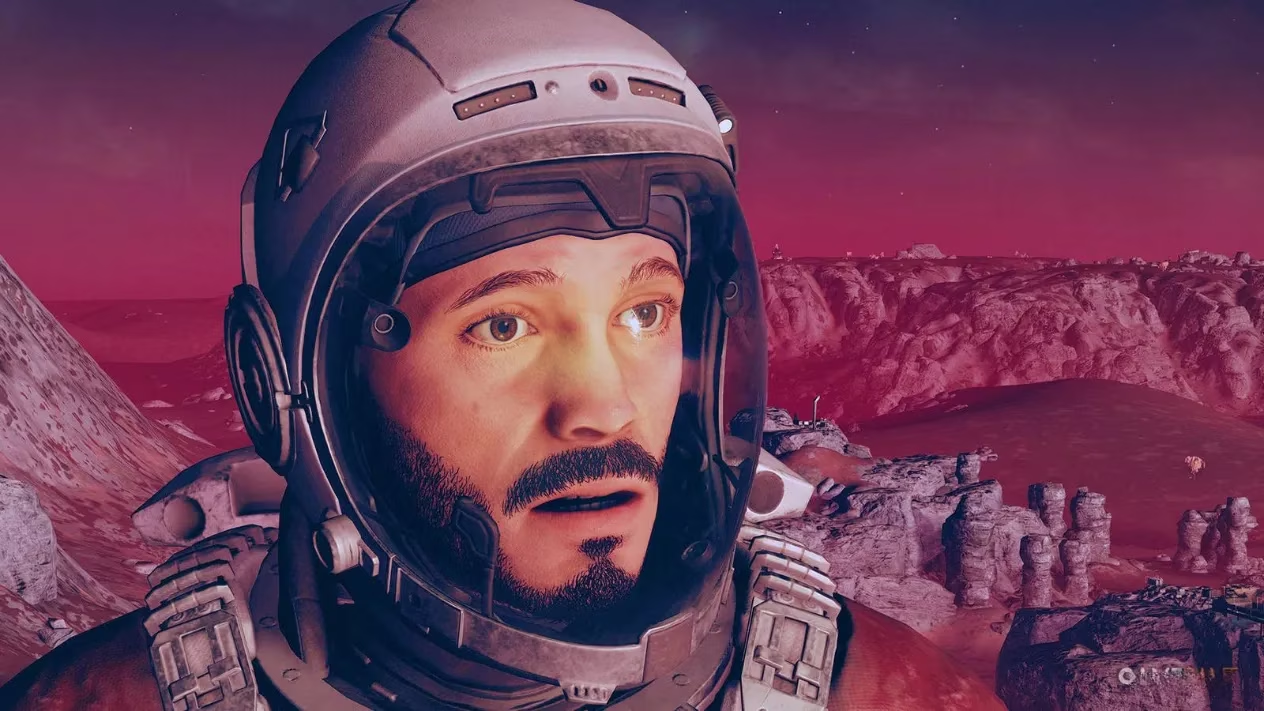
** 🧩 Why Bug‑Free Is a Pure Fantasy **
Nesmith didn’t mince words. “There is no game on the market that is bug free,” he stated bluntly. For Bethesda, the scale of the challenge is multiplied by their signature style: gigantic, systems‑driven RPGs where everything from a random cup on a table to a guard’s memory of your stolen sweetroll is simulated. As system complexity grows, the number of things that can go wrong explodes. In a game like Starfield, you’re talking about thousands of NPCs with their own routines, dynamic quests, physics interactions, and an entire galaxy’s worth of procedural generation. 🤯 Each layer adds a fresh web of potential bugs. Fixing them all would require infinite time and resources—something no developer, not even a Microsoft‑backed giant, can afford. At some point, a release date must be called, and the “fix later” balancing act begins.
** ⚖️ The Tolerance Trade‑off: Freedom or Flawlessness? **
Interestingly, Nesmith pointed out that gamers’ relationship with bugs has shifted over the years. In the Morrowind and Oblivion era, players were more tolerant of jank because those titles offered an unimaginable degree of freedom. “If there were 17 things you could do with that NPC,” he explained, “whereas in most games you’d be able to do two,” then accepting that same NPC might occasionally phase into a wall felt like a fair trade‑off. 🗡️ Modern audiences, conditioned by slicker AAA titles, have significantly higher polish expectations. Yet the recipe hasn’t changed: Bethesda still packs its worlds with an unmatched density of interactive systems. The choice becomes—do you want a sandbox where almost anything is possible, or a hyper‑polished corridor? Bethesda gambles on the sandbox, and bugs are the entry price.
| Era | Typical Freedom Level | Bug Tolerance | Example Title |
|---|---|---|---|
| 2002‑2011 | Extremely high | High 🛡️ | Morrowind |
| 2011‑2023 | Very high | Medium 🤖 | Skyrim |
| 2023‑2026 | High | Lower 😤 | Starfield |
** 📋 The Expectation Management Maze **
One of the most eye‑opening segments of Nesmith’s interview was the Catch‑22 of expectation setting. Developers essentially have two options: be radically transparent—publish a giant list of known bugs at launch and risk scaring everyone away—or release quietly and scramble to patch issues while weathering the inevitable “lazy devs” backlash. 🔄 So far, Bethesda has opted for the latter path, and the short‑term noise is predictable. But as Nesmith noted, this isn’t laziness; it’s a pragmatic decision born from the reality that no game can ever be 100% issue‑free, and the first‑day player base would panic at a honest bug catalog longer than the credits. Instead, studios rely on post‑launch patches and the hope that players fall in love with the world enough to overlook the occasional hover‑mug. ☕
** 🔮 What About The Elder Scrolls 6? **
Fast‑forward to 2026, and all eyes are on The Elder Scrolls 6, the long‑awaited sixth mainline entry reportedly targeting a 2029 release. Nesmith, who left Bethesda in 2021 to write urban fantasy novels, has already sounded the alarm: TES6 will have an “almost impossible” time meeting fan expectations. Not because Bethesda won’t try—they will pour everything into it—but because the sheer weight of a decade‑plus of hype, combined with the same system‑complexity reality, means bugs will be part of the package. ✨ The community is already split between those who demand a flawless dragon‑slaying experience and those who secretly cherish the chaotic stories that emerge from a mammoth clipping through a mountain. If Starfield taught us anything, it’s that the more systems a game has, the more glorious—and sometimes hilarious—the cracks become.
** 🌈 Learning to Love the Imperfection **
Ultimately, Bethesda’s worlds have never been about antiseptic perfection. They’re places where a quest can break in unexpected ways, leading to a personal anecdote you’ll share on forums for years. 🎮 The buggy launch of Starfield still delivered hundreds of hours of exploration, ship‑building, and faction drama. As we look toward TES6, it’s worth remembering Nesmith’s insight: a completely bug‑free Bethesda game would require stripping away the very DNA that makes their RPGs so addictive. So, in 2026, maybe it’s time to reframe the conversation. Instead of asking “when will Bethesda fix their games?”, embrace the question “what unbelievable stories will the next batch of bugs bring us?” 🌌 After all, no bug‑free universe has ever been as memorable as a beautifully broken one. 🛠️❤️
Stay tuned for more dev secrets and real‑talk about your favorite RPGs.