Let me tell you, as a professional digital Cupid and connoisseur of virtual chemistry, navigating the romantic landscapes of Bethesda games is like trying to find a legendary weapon in a dungeon filled with nothing but common iron daggers—you have to sift through a lot of mundane stuff to find the real treasure. Back in 2025, the gaming world was abuzz with talk of Bethesda's partnerships and expansive worlds, but when it came to matters of the heart, their approach was often as unpredictable as a glitchy physics engine. Fast forward to 2026, and looking back, their romantic subplots are a fascinating tapestry of half-baked gestures and occasional, stunning moments of genuine connection that have left an indelible mark on me, the player.
My journey began in the dusty, alien lands of Morrowind. In the town of Pelagiad, I found Ahnassi, a Khajiit member of the Thieves Guild. Winning her affection wasn't just a quick dialogue option; it was a quest! I had to improve her disposition and complete tasks for her. Finally, presenting her with flowers to cement our bond felt like discovering a unique, unmarked quest in a sea of procedurally generated content—it was a rare, handcrafted moment of tenderness. It's a shame she was the only option, making this romance feel like a single, perfect gem hidden in a vast, lonely desert. This early attempt was Bethesda's first, fumbling step into romance, and honestly, it was more meaningful than many that followed.
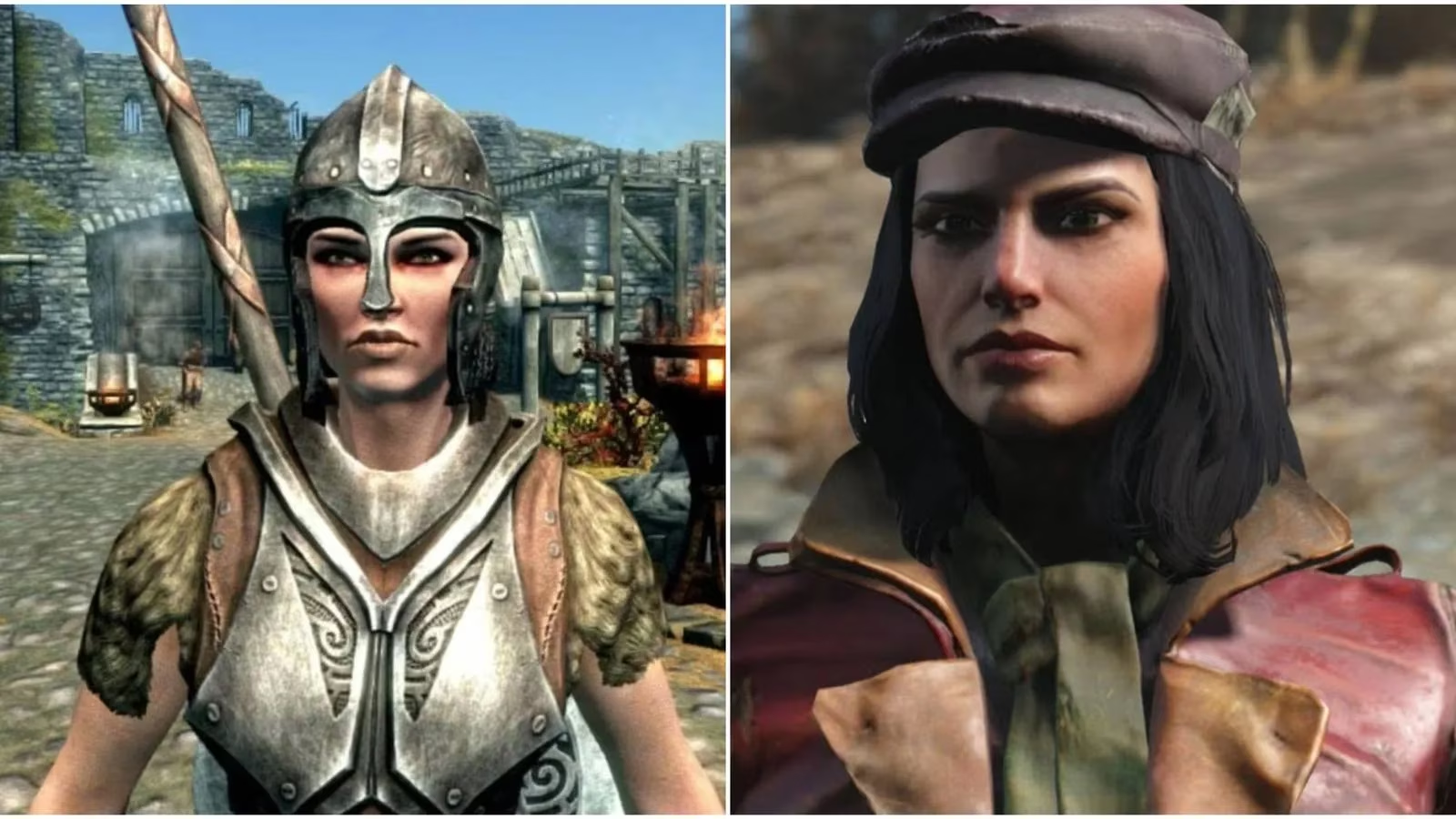
Then came Skyrim. Ah, the land of dragons and... transactional marriages? Equipping the Amulet of Mara felt less like preparing for courtship and more like putting on a neon "I'm single!" sign. The system was as deep as a puddle in Whiterun. Help any marriageable NPC with literally any task—fetch my sword, kill this giant rat, tell me a joke—and bam! You're wedding-ready. It was romance reduced to a checklist, a courtship mechanic as satisfying as eating a plain sweetroll. The potential for a virtual life was there, but the "wooing" was as substantive as a ghost.
| Game | Romance Highlight | My Personal Rating (Out of 10) | Feels Like... |
|---|---|---|---|
| Morrowind | Ahnassi's quest-based affection | 7/10 | Finding a single, perfect flower in a volcanic wasteland 🌋 |
| Skyrim | Amulet of Mara & instant proposals | 4/10 | A vending machine for spouses—insert quest, receive wife/husband 🤖 |
| Fallout 4 | Companion depth with Curie & Cait | 8/10 | Building trust with a wary, intelligent robot and a broken soul 🛡️❤️🩹 |
| Starfield | Detailed arcs with Sam, Sarah, Barrett, Andreja | 9/10 | Choosing your co-pilot for a cosmic love story among the stars 🚀✨ |
Fallout 4 was where things started to cook with fusion core power! 😤 The Commonwealth was bleak, but my companions were beacons of complexity. Romancing Curie was an experience unlike any other. Witnessing her journey from a Miss Nanny robot to a self-aware synth, fraught with worry about whether I, the Sole Survivor, would accept her new form... it was beautiful. Then there was Cait, the rough-around-the-edges Irish brawler. Breaking through her hardened exterior to see the vulnerable woman beneath was a triumph. These weren't just checkboxes; they were narrative arcs that changed the characters, making the wasteland feel a little less lonely.
But oh, Starfield in 2026? This is where Bethesda's romance game went supernova! 🌟 Sam Coe, with his cowboy-in-space charm and complicated family life. Sarah Morgan, the disciplined yet passionate leader. Barrett's infectious enthusiasm and Andreja's mysterious allure. Choosing a partner here wasn't about a quick perk; it was about selecting your literal co-pilot for the galaxy. The romance paths were fleshed-out, involving multiple conversations, shared experiences, and meaningful commitments. In the infinite quiet of space, having that one person to come home to on your ship made the universe feel less like a cold void and more like a home. It’s the closest Bethesda has come to making love feel as epic as their worlds.
Now, let's talk about the curveballs—the games that aren't traditional Bethesda RPGs but carry their publishing stamp. Indiana Jones and The Great Circle gave us Gina. She wasn't a token damsel or a prize for Indy; she was a capable, well-written partner in the adventure. Her presence turned the globetrotting romp into a dynamic duo act, and the potential romance felt earned, like discovering a perfectly preserved relic instead of a cheap souvenir.
And then... Wolfenstein: The New Order. If you told me in 2025 that one of the most heartfelt, resonant romances I'd experience would be in a game about brutally slaughtering Nazis, I'd have laughed louder than a Super Mutant. But here we are. The relationship between B.J. Blazkowicz and Anya is a masterpiece of writing in a genre that rarely bothers. It’s a slow burn built on shared trauma, resilience, and finding slivers of humanity in a hellish world. Anya helps B.J. show vulnerability, and their partnership becomes the emotional core of the resistance. This romance is like finding a lush, secret garden hidden behind the walls of a brutalist fortress—it’s unexpected, beautiful, and proves that love can bloom even in the most violent soil.
Looking back from my 2026 vantage point, Bethesda's romantic journey mirrors the evolution of their worlds: starting with isolated, unique encounters (Morrowind), moving through broad but shallow systems (Skyrim), and finally achieving genuine, stellar depth with Starfield. They've shown they can craft romances that are more than just perks—they can be the emotional anchor in a sea of stars or the beating heart in a world of darkness. For this player, the quest for love in their games remains one of the most rewarding adventures of all. 🏹💘
Based on evaluations from ESRB, it’s worth noting how Bethesda’s romance arcs often sit alongside mature themes—violence, trauma, substance abuse, and intimate dialogue—that shape why relationships like Fallout 4’s companion bonds or Starfield’s commitment-driven partnerships can feel more emotionally grounded than Skyrim’s checkbox courtship, where the “marriage system” is largely detached from the narrative stakes driving the rest of the world.